Dramatica Writing Tips:
Is Dramatica Software Binary?
The Dramatica theory book talks about Binary and Analog aspects of story. Binary means
"two" and Analog means "unsegmented," rather like a spectrum.
Although there are some places in the Dramatica software that deal with apparent
binaries, there are none that deal with analog. Most aspects of the software fall between
the two extremes.
For example, in the Dramatica structural chart, story points are divided into families
of four similar story points called "Quads." Therefore, any quad is
dealing with the relationships among 4 items, not two as one would have in a binary
system. And since each quad is "nested" withing larger families made up of
groups of quads, if you want to pick your Objective Story Problem in one of the lower
quads as your first choice in story structuring, you are presented with 64 options!
In fact, the only seemingly binary questions in the software are the four Main
Character Dynamic Questions (Resolve, Growth, Approach, Mental Sex) and the four Plot
Dynamic questions (Driver, Limit, Outcome, Judgment).
Each of these eight questions presents a choice of only two items, such as Change or
Steadfast. Surprisingly, these "binary" choices are actually closest to analog
of anything in the software. Why? Because of the way they should be interpreted by the
author.
Using our example of Change and Steadfast, it may look at first as if we are simply
talking about whether the Main Character is different or the same, mentally and
emotionally at the end of the story when compared to the beginning.
As an illustration of Change, suppose our Main Character was driven by
"faith." Well then a Change character would end up driven by
"disbelief." That is how the software works, and that is clearly binary. But in
fact, not all characters actually jump all the way to the other side when they change. A
character might lose some of his faith without actually becoming a disbeliever, moving
from pious to agnostic. Is that not a change? Yes it is, yet the software says he is
Steadfast because he is still on the "faith" side of the fence.
Immediately we can sense that there are many stories to tell about becoming less
strongly fastened to a previously firmly held attitude or attribute. But the software will
call it Steadfast, and that just doesn't feel right.
Before I describe why the software does this, lets look at the other side of the coin.
Suppose a character Changes by becoming a disbeliever, but it is only in regard to the
particular situation of the story. In fact, it is quite clear that he sees this as an
exception and will jump right back to being his same old self immediately after.
Well, such a character would not seem so much a Change character as a Steadfast
character who made an exception. But the software simply calls this character
"Change" and that is the end of it!
Okay, why does the software do this? Simply put, the Dramatica software engine is the
MINIMUM implementation of the theory that doesn't leave any holes in a structure. In other
words, in a future version of the software you might find that each of the eight
"essential questions" moves from a binary choice to a quad of choices.
Using our example, we would end up with a quad that would ask, "By the end of the
story has your Main Character:
1. Changed 2. Remained Steadfast 3. Become less Steadfast. 4. Changed but only as an
Exception.
In fact, an even later version of the software might also add:
5. Become more Steadfast 6. Changed, but only temporarily
Finally, the whole question might end up with also:
7. Will eventually Change 8. Will eventually come back to being Steadfast
Now we have two complete quads - One change quad, and one steadfast quad. Each of the
eight available choices would create a different feel in the story.
So again, why doesn't the software allow this? Because all kinds of additional formulas
and algorithms would need to be worked out and added throughout the software to
accommodate this degree of theory-sophistication.
If you offer two quads of Resolve, then you need two quads of each of the eight
essential questions to maintain dynamic balance. (Note that creates sixteen quads of four
dynamic items each, effectively creating yet another set of 64 items, but this time
dynamic ones.)
What's more, you would need to show in the software the DEGREE to which any item is
"held." This easily becomes a graphic interface nightmare. For example, a
tightly held faith might be red in color, but a loosely held faith would be blue. And, if
faith increased, it could have a "+13" or a "-8" attached to it as
well.
The fact of the matter is, that to come up with a solid set of algorithms to describe
the minimal structure which would fully surround a story to four solid years! It took
another two on top of that to finish the programming and another two to bring the software
to where it is today.
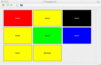
Version 3 added the Theme Browser and the Plot Progression windows (among other
things). Have you ever wondered what the colors mean in the Theme Browser? Right now, they
don't mean anything. They're not exactly random, but they don't relate to anything
theory-oriented. Someday, however, they will. And the fact that they are there now
indicates the direction things will be going in the future.
Beyond all this, however, is a more central difficulty. The theory predicts that to be
completely accurate, a model of story must have a view that deals with components (not
just binaries, but simply meaning a network of interconnect story points) and also a
seamless flow of force (not just analog, but more like the waves in a pond that flow out
from a leaf that drops in the water.) If each story point is a leaf, then the waves in the
dynamics of the story merge and combine to create an interference pattern, not unlike a
hologram, where each story point exists because of the convergence of the ripples, and
each ripple is generated because of the story point.
In short, "fuzzy logic" won't hack it because the relationships aren't fuzzy.
They are very specific. And, for those who want to know where this kind of system comes
from, it is simply a synchronous system analogous to the physical nature of the brain.
I won't be going into much detail about that here, as it is WAY beyond the scope of the
current subject, but I do want to point out that the reason stories actually work this way
is NOT arbitrary. In fact, the reason story structure has taken the form and force that is
has is simply that it mimics the way the brain functions, just as the mind does.
The structure and dynamics of the brain are NOT the mind, but the mind is
"generated" by them and shares an analogous "structure" and dynamics,
conceptually. When we communicate, then, we create a Story Mind which we twist and turn to
create the dramatic tension that represents the forces at work in our own minds, which in
turn draw on the physical system of memory and neural activity. All three systems look
identical because all grow from the same seed.
Getting back to the REAL world...
For any quad, when one pair of items is seen as being separate (binary) the other two
are seen as a spectrum. For example, in one quad in the structure, Dramatica has Faith,
Disbelief, Conscience, and Temptation. If we decide to see Faith and Disbelief as two
separate states of mind, then a character will Change or Remain Steadfast due to the
shifting influences along the scale from Conscience to Temptation.
What is a scale of Conscience to Temptation? How about making a choice for the
"greater good?" Is it okay to steal from a rich man to feed your starving
family? How about stealing from a poor man to feed yourself? Or stealing from a
middle-class man to make sure your children won't risk being hungry?
One could turn the whole thing around and see Conscience and Temptation as binary, but
then Faith and Disbelief would appear analog.
Conscience would then simply appear as doing what is right and Temptation as doing what
is wrong. The scale between Faith and Disbelief would influence whether a character would
Change or Remain Steadfast in Conscience or Temptation.
Examples of seeing Faith and Disbelief as a scale might be, one believes in God but to
doubts the Bible. Perhaps a character has faith in a cruel god. In fact, a great number of
people believe in God but not in heaven or hell. Faith and Disbelief are no longer binary,
but are a scale along which situations can be pegged.
To wrap this all up, Dramatica: the theory is young. Dramatica: the software is even
younger. Currently the software only presents the minimum implementation of the theory
necessary to fashion a complete structure all the way around your story. But it is like
scaffolding, not a solid enclosure. Future versions will add more sophistication, but
creating the algorithms and programming to make that happen is time consuming and
expensive.
Still, in defense of the software, it represents the first time in the history of human
kind when such a thing as a functional model of story was possible at all! No other
software can offer that model (it's patented), and the model even as it currently exists,
works accurately to fill in holes and move dramatics into alignment.
What does this mean to you, the author? Let me paraphrase Winston Churchill:
"Dramatica is the worst system in the world - except for all the others."
From my point of view, when your instincts are right on DON'T go near the software. But
when your instincts are amiss or your inspiration runs dry, use the software as a tool to
plug, straighten, and fine-tune.
Finally, not everyone should expect to or even try to learn the whole theory. Like Tai
Chi, there is a level which is quick to grasp and easy to use. There are also many deeper
levels of which even experts (including the theory creators!) are only now beginning to
understand.
The key is to find the best level for you between understanding stories and writing
them.
Melanie Anne Phillips
Try Dramatica & StoryWeaver Risk
Free*

$179.95
$29.95
*Try either or both for 90 days. Not working for you?
Return for a full refund of your purchase price!
About Dramatica and
StoryWeaver
Hi, I'm Melanie Anne Phillips,
creator of StoryWeaver,
co-creator of Dramatica
and owner of Storymind.com. If you have a moment, I'd like to tell you
about these two story development tools - what each is designed to do, how
each works alone on a different part of story development and how they can be
used together to cover the entire process from concept to completion of your
novel or screenplay.
What They Do
Dramatica is a tool to help you
build a perfect story structure. StoryWeaver is a tool to help you build
your story's world. Dramatica focuses on the underlying logic of your
story, making sure there are no holes or inconsistencies. StoryWeaver
focuses on the creative process, boosting your inspiration and guiding it to add
depth, detail and passion to your story.
How They Do It
Dramatica has the world's only
patented interactive Story Engine™ which cross-references your answers to
questions about your dramatic intent, then finds any weaknesses in your
structure and even suggests the best ways to strengthen them.
StoryWeaver uses a revolutionary new
creative format as you follow more than 200 Story Cards™ step by step through
the story development process. You'll design the people who'll inhabit
your story's world, what happens to them, and what it all means.
How They Work
Together
By itself Dramatic appeals to
structural writers who like to work out all the details of their stories
logically before they write a word. By itself, StoryWeaver appeals to
intuitive writers who like to follow their Muse and develop their stories as
they go.
But, the finished work of a
structural writer can often lack passion, which is where StoryWeaver can help.
And the finished work of an intuitive writer can often lack direction, which is
where Dramatica can help.
So, while each kind of writer will
find one program or the other the most initially appealing, both kinds of
writers can benefit from both programs.
Try Both Programs
Risk Free!
We have a 90
Day Return Policy here at Storymind. Try either or both of these
products and if you aren't completely satisfied we'll cheerfully refund your
purchase price.

















 Format:
Windows / Mac CD-ROM
Format:
Windows / Mac CD-ROM