|
|
Software |
StoryWeaver
$29.95

A step by
step approach to story development, from concept to completed story for
your novel or screenplay. More than 200 interactive Story Cards guide
you through the entire process.
Details
and Demo
Dramatica
$149.95

The most
powerful story structuring software available, Dramatica is driven by a
patented "Story Engine" that cross-references your dramatic
choices to ensure a perfect structure.
Details
and Demo
Movie
Magic Screenwriter
$149.95

The most
advanced screenwriting software available, Movie Magic is deemed a
"preferred file format" by the Writer's Guild. An industry
standard, MMS is used by professionals and studios around the world.
Details
and Demo
Throughline
Index Cards
$9.95
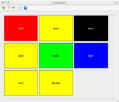
Interactive
index cards - Name them, add notes, titles, colors, click and drag to
re-arrange, adjust font, save, export and print. An essential tool for
every writer.
Details
Academic
Discounts
on Select Products

Are you a
student, teacher, or academic staffer? Get the very best price on select
products with these manufacturer sponsored academic discounts!
Details

|
| |
A Writer Asks...
What is the best way for a new user to approach Dramatica?
Melanie Replies...
First and foremost, Dramatica is a theory of story. The software
serves to implement aspects of the theory in a handy and practical manner. Personally, I
feel that a writer using Dramatica solely to create a blueprint for a story is missing a
big part of the power of the theory.
As one becomes more and more familiar with aspects of the theory,
these new concepts begin to take hold in a writer's mind at a subconscious level - right
where his or her creativity springs forth. In a sense, the theory explanations become
subliminal patterns of thought in the author's mind that fine tune his or her writer's
instincts, help him or her avoid holes in the story's logic and feeling, and offer a way
around writer's blocks.
The Dramatica software can be thought of as "training
wheels" in the craft of writing. When one is up to speed, the wheels can come off.
Unlike riding a bike, however, one DOES forget how, in the craft of writing. This occurs
because every day we assume new and different givens, become accustomed and conditioned to
new ideas and environments, and as a result we lose touch with how others might view our
work. If our intent is to communicate and to move our audience to feel specifically what
we have in mind for their hearts, we must hone our skills in getting the message across.
That's where the Dramatica software comes in.
Both Dramatica Writer's DreamKit and Dramatica Pro come with a
special book called the StoryGuide. This book is designed to get new users up to speed
with the theory while creating a complete scene order or chapter order treatment for a
story along the way. Buy using the workbook along with a special pathway in the software,
the new user can put the theory to work immediately and get to know the software at the
same time. Once this path has been taken the first time, most writers will want to chart
their own path through Dramatica, tailoring their use of the software tool to match their
personal writing styles.
The way I use the software myself is as a periodic tune-up. I
like to write the first draft of a work without using the software. Then, I go into the
software and fill in all the storytelling information first. Next, I go to the
Storyforming section, click the "storytelling" button and make my Storyforming
choices based on what I read on the screen of my own storytelling.
I don't go through the lists in order, but rather start with the
dramatic items of most importance to me in this particular story. That way, when I finally
get down to storytelling I've done that doesn't fit ANY of the available Storyforming
choices, it is usually not a pet concept, and I can alter my storytelling approach to fit
the overall argument of my story.
Finally, when I have arrived at a complete Storyform and brought
my storytelling into line, I add any additional storytelling for Storyforming items I had
not addressed in my first draft. I then print out the "kitchen sink" report for
a record of my ENTIRE Storyform, and use that as a reference while I write.
During the original writing process and the re-writing process
then, I don't actually use Dramatica at all. I prefer to follow my instincts, once they
know where they are going. For the first draft, I don't want to be hindered by analysis,
no matter how accurate the feedback may be. Then, between drafts, I want to hear what
Dramatica has to say. And finally, during the re-write, I again want to go with my
now-refined instincts, and only refer to the "kitchen sink" report when I am at
a loss. In this manner, I retain the immediacy and serendipity of my work, and still take
advantage of the unique insights provided by Dramatica which keep my work honest for the
audience.
The StoryGuide system that comes as a separate book with the
software was designed to familiarize novice writers with many useful concepts in the
Dramatica theory that should have an immediate positive impact on their skills. It is my
hope that once a writer's creative feet are wet, he or she will wade out a little farther
toward the deep water, leave the floats behind and take the plunge into his or her own
inspirations. When one feels the currents pulling one out to sea, however, that is when
Dramatica can throw out a life preserver and help you find your way back to shore.
Well, I wax poetic. Sorry! Just my muse pulling me around by the
nose. In any event, thank you again for your question, and I wish you the best of luck in
your writing projects, hoping Dramatica proves to be the positive and powerful writing
tool you're looking for.
Visit
the Dramatica Theory Home Page
Try Dramatica & StoryWeaver Risk
Free*

$179.95
$29.95
*Try either or both for 90 days. Not working for you?
Return for a full refund of your purchase price!
About Dramatica and
StoryWeaver
Hi, I'm Melanie Anne Phillips,
creator of StoryWeaver,
co-creator of Dramatica
and owner of Storymind.com. If you have a moment, I'd like to tell you
about these two story development tools - what each is designed to do, how
each works alone on a different part of story development and how they can be
used together to cover the entire process from concept to completion of your
novel or screenplay.
What They Do
Dramatica is a tool to help you
build a perfect story structure. StoryWeaver is a tool to help you build
your story's world. Dramatica focuses on the underlying logic of your
story, making sure there are no holes or inconsistencies. StoryWeaver
focuses on the creative process, boosting your inspiration and guiding it to add
depth, detail and passion to your story.
How They Do It
Dramatica has the world's only
patented interactive Story Engine™ which cross-references your answers to
questions about your dramatic intent, then finds any weaknesses in your
structure and even suggests the best ways to strengthen them.
StoryWeaver uses a revolutionary new
creative format as you follow more than 200 Story Cards™ step by step through
the story development process. You'll design the people who'll inhabit
your story's world, what happens to them, and what it all means.
How They Work
Together
By itself Dramatic appeals to
structural writers who like to work out all the details of their stories
logically before they write a word. By itself, StoryWeaver appeals to
intuitive writers who like to follow their Muse and develop their stories as
they go.
But, the finished work of a
structural writer can often lack passion, which is where StoryWeaver can help.
And the finished work of an intuitive writer can often lack direction, which is
where Dramatica can help.
So, while each kind of writer will
find one program or the other the most initially appealing, both kinds of
writers can benefit from both programs.
Try Both Programs
Risk Free!
We have a 90
Day Return Policy here at Storymind. Try either or both of these
products and if you aren't completely satisfied we'll cheerfully refund your
purchase price.
Our
Complete Catalog of Products
|

Get
the Writer's Survival Kit Bonus Package
FREE with ANY purchase!
A $300 Value!
|
|
StoryWeaver
- $29.95
Our
Bestseller! A
step by step approach to story development, from concept to completed
story for your novel or screenplay. More than 200 interactive
Story Cards guide you through the entire process.
|
|
Dramatica
Pro - $179.95
Includes
2 Exclusive Bonuses! The
most powerful story structuring software available, Dramatica is driven
by a patented "Story Engine" that cross-references your
dramatic choices to ensure a perfect structure.
|
 |
Dramatica
Writer's DreamKit - $49.95
Little
brother to Dramatica Pro, Writer's DreamKit is built around the same
patented Story Engine - it just tracks fewer story points. So, you
develop the same solid story structure, just with fewer details.
Perfect for beginning writers or those new to Dramatica.
|
 |
Power
Structure - $149.95
An
all-in-one writing environment with built-in word processor that helps
you organize and cross-reference your story development materials.
INCLUDES DVD SET BONUS!
|
|

|
Power
Writer - $99.95
The little
brother of Power Structure includes the essential organization and word
processing tools writers need the most.
|
 |
Throughline
- Index Cards (Mac) - $19.95
Interactive
index cards - add notes, titles, colors, click and drag to re-arrange.
An essential tool for every writer.
|
|
Movie
Magic Screenwriter - $149.95
The most
advanced screenwriting software available, Movie Magic is deemed a
"preferred file format" by the Writer's Guild. An
industry standard, MMS is used by professionals and studios around the
world.
|
|

|
Final
Draft - $199.95
Like Movie
Magic Screenwriter, Final Draft is an industry standard, used by many
professional screenwriters and studios around the world.
|
 |
Between
The Lines (Macintosh) - $29.95
The lowest
cost automatic screenplay formatter for Macintosh includes high-end
features such as interactive index cards linked to your script.
|
|

|
 |
12
Hour Writing Course - $19.95
Everything
you need to know about story structure - twelve hours of video on a
single DVD - presented by Dramatica Theory co-creator, Melanie Anne
Phillips.
|
 |
Dramatica
Software Companion - $19.95
More than
four hours of video demonstrations of every key feature in Dramatica,
narrated by the co-creator of Dramatica.
|
 |
StoryWeaving
Tips Book - $19.95
170 pages of
eye-opening essays on story structure, storytelling, finding inspiration
and a wide variety of writing techniques.
|
|
StoryWeaving
Seminar 8 DVD Set - $99.95
14 hours of
video from a live two day course taught by theory co-creator Melanie
Anne Phillips covering Dramatica story structure and StoryWeaver
storytelling.
|
|
StoryWeaving
Seminar Online - $49.95
The same 14
hour program presented in streaming video that you can view online or
download for a permanent copy.
|
|
Dramatica
Theory 2 Hour Audio Program - $19.95
Every key
concept in the Dramatica Theory of Story is fully explained in this
double-CD set.
|
|

|
Writing
Characters of the Opposite Sex - $29.95
A three-hour
audio CD set that explains everything you need to know to create
characters of both sexes that ring absolutely true (and maybe even gain
insight into the communication problems in the real world!)
|
 |
Master
Storyteller Improves Your Writing - $29.95
Become a
better writing with this series of interactive exercises.
|
|

|
How
to Create Great Characters DVD - $19.95
A 90 minute
video program recorded during Dramatica co-creator Melanie Anne
Phillips' live in-person seminar on story structure and storytelling.
|
|

|
Structure
vs. Passion - Audio CD $19.95
The Story
Mind approach to writing uses your own passions to create your story's
structure. It focuses your efforts, clarifies the direction of
your story, and triggers your imagination.
|
|

|
Writing
with the Story Mind - Audio CD - $19.95
Learn how to
psychoanalyze your story's "mind" to uncover and treat
problems with characters, plot, theme, and genre.
|
|

|
|
|
Academic
Prices - Discounts on Select Products
Are you a
student, teacher, or academic staffer? Get the very best price on
select products with these manufacturer sponsored academic discounts!
|
|

|
Package
Deals - Starting at $49.95
Get deep
discounts with these bundles of our most popular writing products.
|
|

|
Writer's
Survival Kit Bonus Package - FREE!
Free with
ANY purchase - Writing software, online writing workshops, writing
seminars on video, story theory book, and much, MUCH more!
|
| |
|













 Format:
Windows / Mac CD-ROM
Format:
Windows / Mac CD-ROM
