|
|
Software |
StoryWeaver
$29.95

A step by
step approach to story development, from concept to completed story for
your novel or screenplay. More than 200 interactive Story Cards guide
you through the entire process.
Details
and Demo
Dramatica
$149.95

The most
powerful story structuring software available, Dramatica is driven by a
patented "Story Engine" that cross-references your dramatic
choices to ensure a perfect structure.
Details
and Demo
Movie
Magic Screenwriter
$149.95

The most
advanced screenwriting software available, Movie Magic is deemed a
"preferred file format" by the Writer's Guild. An industry
standard, MMS is used by professionals and studios around the world.
Details
and Demo
Throughline
Index Cards
$9.95
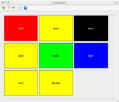
Interactive
index cards - Name them, add notes, titles, colors, click and drag to
re-arrange, adjust font, save, export and print. An essential tool for
every writer.
Details
Academic
Discounts
on Select Products

Are you a
student, teacher, or academic staffer? Get the very best price on select
products with these manufacturer sponsored academic discounts!
Details

|
| |
A Writer Asks
Hi, I bought Dramatica in January and have been having a great deal of
fun with it. I'm probably a bit dangerous, give me hammer and everything becomes a nail,
etc. Do you talk to Dramatica users? I hope so. I've talked to a video producer about
Dramatica and he immediately wondered if it could help with a 10 minute story. Any
suggestions? On a broader scale, it has occurred to me that meaning and 'story' are
inseparable. Everything that 'means' something fits into a story of some sort. Have you
explored this aspect of story?
Thanks
Melanie Replies
Sure, Dramatica can be used for short stories. The key is, every story
must be complete WITHIN THE SCOPE OF THE ARGUMENT. So, to have a complete short story, one
must have a balanced, but smaller scope.
In Dramatica this is done one of two ways. Either you limit your depth
or breadth. If you limit depth, you might tell a story that only examines issues down to
the Type level, for example, in the chart of Story Elements. In this way, the more nuanced
exploration of Variations and Elements is left un-explored, and the scope of the argument
is reduced.
Even though the Elements are what normally create characters, there is
no reason why Types or Variations cannot be the basis for characters. So, you might have a
Doing character, a Becoming character, or a Progress character, for example. The key is,
once a level of the chart is assigned as the Character level, all of the dramatic
appreciations (concepts) in that level must be explored as Characters.
In a sense, when you limit depth, you simple don't explore one or more
aspects of a story: Character, Plot, Theme, or Genre. This keeps the argument smaller so
that it occupies less media real estate.
The other method, limiting breadth, keeps all four aspects of a story
but narrows the point of view. Rather than examining all four throughlines (Main
Character, Obstacle Character, Objective Story, Subjective Story) one or more is cut out.
In this manner, you might have a single point of view, such as Main Character, but explore
it in full depth through Character, Plot, Theme, and Genre.
This will also create a much shorter story, depending upon how many
throughlines you explore. A rule of thumb is that you would want one, two, or all four
throughlines. Why? Because a single throughline provides a perspective. Two throughlines
provide a conflict. But three seems to be one conflict and another superfluous throughline
that bounces off nothing. Of course, if that third point of view is important to you, use
it, but be sure you telegraph to your audience not to expect conflict from this direction,
but only another angle or take on the meaning of the story.
Finally, you can combine both techniques and limit both depth and
breadth. In this case, you might have only a Main Character point of view and explore that
only in terms of the Types. This will heavily cut down on the three dimensional scope of
the argument as mapped out in the structural chart.
So, you have a lot of latitude as to which parts of a Grand Argument
Story you wish to explore in a shorter story. The key is that you must let your audience
know in some fashion not to expect a Grand Argument Story, and avoid including elements
outside the scope of the argument you really want to make. Otherwise, if they see a few
other elements creep in, they will demand that you make your point there as well, for they
will not give you anything that is not within your scope, unless you fully develop it.
Also, to know which dramatic elements go together in a shorter story,
you must still develop a complete story form for the entire Grand Argument Story, even
though you don't intend to tell it all. This is because any limited point of view does not
stand alone, but is dependent upon all other points of view to which it is, in a larger
sense, connected.
You don't need to DEVELOP these other parts of the larger story, but you
will need to include them in your storyform to make sure the piece you are presenting is
consistent with a greater reality.
Since writing a short story is, in a sense, cutting vertical and/or
horizontal layers out of the larger Grand Argument Story, in Dramatica we refer to this
process as "Slicing and Dicing".
Melanie
Visit
the Dramatica Theory Home Page
Try Dramatica & StoryWeaver Risk
Free*

$179.95
$29.95
*Try either or both for 90 days. Not working for you?
Return for a full refund of your purchase price!
About Dramatica and
StoryWeaver
Hi, I'm Melanie Anne Phillips,
creator of StoryWeaver,
co-creator of Dramatica
and owner of Storymind.com. If you have a moment, I'd like to tell you
about these two story development tools - what each is designed to do, how
each works alone on a different part of story development and how they can be
used together to cover the entire process from concept to completion of your
novel or screenplay.
What They Do
Dramatica is a tool to help you
build a perfect story structure. StoryWeaver is a tool to help you build
your story's world. Dramatica focuses on the underlying logic of your
story, making sure there are no holes or inconsistencies. StoryWeaver
focuses on the creative process, boosting your inspiration and guiding it to add
depth, detail and passion to your story.
How They Do It
Dramatica has the world's only
patented interactive Story Engine™ which cross-references your answers to
questions about your dramatic intent, then finds any weaknesses in your
structure and even suggests the best ways to strengthen them.
StoryWeaver uses a revolutionary new
creative format as you follow more than 200 Story Cards™ step by step through
the story development process. You'll design the people who'll inhabit
your story's world, what happens to them, and what it all means.
How They Work
Together
By itself Dramatic appeals to
structural writers who like to work out all the details of their stories
logically before they write a word. By itself, StoryWeaver appeals to
intuitive writers who like to follow their Muse and develop their stories as
they go.
But, the finished work of a
structural writer can often lack passion, which is where StoryWeaver can help.
And the finished work of an intuitive writer can often lack direction, which is
where Dramatica can help.
So, while each kind of writer will
find one program or the other the most initially appealing, both kinds of
writers can benefit from both programs.
Try Both Programs
Risk Free!
We have a 90
Day Return Policy here at Storymind. Try either or both of these
products and if you aren't completely satisfied we'll cheerfully refund your
purchase price.
Our
Complete Catalog of Products
|

Get
the Writer's Survival Kit Bonus Package
FREE with ANY purchase!
A $300 Value!
|
|
StoryWeaver
- $29.95
Our
Bestseller! A
step by step approach to story development, from concept to completed
story for your novel or screenplay. More than 200 interactive
Story Cards guide you through the entire process.
|
|
Dramatica
Pro - $179.95
Includes
2 Exclusive Bonuses! The
most powerful story structuring software available, Dramatica is driven
by a patented "Story Engine" that cross-references your
dramatic choices to ensure a perfect structure.
|
 |
Dramatica
Writer's DreamKit - $49.95
Little
brother to Dramatica Pro, Writer's DreamKit is built around the same
patented Story Engine - it just tracks fewer story points. So, you
develop the same solid story structure, just with fewer details.
Perfect for beginning writers or those new to Dramatica.
|
 |
Power
Structure - $149.95
An
all-in-one writing environment with built-in word processor that helps
you organize and cross-reference your story development materials.
INCLUDES DVD SET BONUS!
|
|

|
Power
Writer - $99.95
The little
brother of Power Structure includes the essential organization and word
processing tools writers need the most.
|
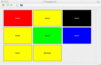 |
Throughline
- Index Cards (Mac) - $19.95
Interactive
index cards - add notes, titles, colors, click and drag to re-arrange.
An essential tool for every writer.
|
|
Movie
Magic Screenwriter - $149.95
The most
advanced screenwriting software available, Movie Magic is deemed a
"preferred file format" by the Writer's Guild. An
industry standard, MMS is used by professionals and studios around the
world.
|
|

|
Final
Draft - $199.95
Like Movie
Magic Screenwriter, Final Draft is an industry standard, used by many
professional screenwriters and studios around the world.
|
 |
Between
The Lines (Macintosh) - $29.95
The lowest
cost automatic screenplay formatter for Macintosh includes high-end
features such as interactive index cards linked to your script.
|
|

|
 |
12
Hour Writing Course - $19.95
Everything
you need to know about story structure - twelve hours of video on a
single DVD - presented by Dramatica Theory co-creator, Melanie Anne
Phillips.
|
 |
Dramatica
Software Companion - $19.95
More than
four hours of video demonstrations of every key feature in Dramatica,
narrated by the co-creator of Dramatica.
|
 |
StoryWeaving
Tips Book - $19.95
170 pages of
eye-opening essays on story structure, storytelling, finding inspiration
and a wide variety of writing techniques.
|
|
StoryWeaving
Seminar 8 DVD Set - $99.95
14 hours of
video from a live two day course taught by theory co-creator Melanie
Anne Phillips covering Dramatica story structure and StoryWeaver
storytelling.
|
|
StoryWeaving
Seminar Online - $49.95
The same 14
hour program presented in streaming video that you can view online or
download for a permanent copy.
|
|
Dramatica
Theory 2 Hour Audio Program - $19.95
Every key
concept in the Dramatica Theory of Story is fully explained in this
double-CD set.
|
|

|
Writing
Characters of the Opposite Sex - $29.95
A three-hour
audio CD set that explains everything you need to know to create
characters of both sexes that ring absolutely true (and maybe even gain
insight into the communication problems in the real world!)
|
 |
Master
Storyteller Improves Your Writing - $29.95
Become a
better writing with this series of interactive exercises.
|
|

|
How
to Create Great Characters DVD - $19.95
A 90 minute
video program recorded during Dramatica co-creator Melanie Anne
Phillips' live in-person seminar on story structure and storytelling.
|
|

|
Structure
vs. Passion - Audio CD $19.95
The Story
Mind approach to writing uses your own passions to create your story's
structure. It focuses your efforts, clarifies the direction of
your story, and triggers your imagination.
|
|

|
Writing
with the Story Mind - Audio CD - $19.95
Learn how to
psychoanalyze your story's "mind" to uncover and treat
problems with characters, plot, theme, and genre.
|
|

|
|
|
Academic
Prices - Discounts on Select Products
Are you a
student, teacher, or academic staffer? Get the very best price on
select products with these manufacturer sponsored academic discounts!
|
|

|
Package
Deals - Starting at $49.95
Get deep
discounts with these bundles of our most popular writing products.
|
|

|
Writer's
Survival Kit Bonus Package - FREE!
Free with
ANY purchase - Writing software, online writing workshops, writing
seminars on video, story theory book, and much, MUCH more!
|
| |
|













 Format:
Windows / Mac CD-ROM
Format:
Windows / Mac CD-ROM
