Plot Tips
A Story's "Limit"
A Writer asks...
What changes within the Story´s structure when you switch the Limit from
Optionlock - to Timelock or vice versa ?
I reply...
The story's Limit (Optionlock or Timelock) determines whether your story will draw to a
climax because the characters run out of options or run out of time.
The quick answer to your question is that the story's Limit, like most Dramatica story
points, is not dependent on only one thing, but on several. So, there is not a one to one
correlation between Limit and any other single story point. In other words, there is
no simple answer to the question, "What happens to the story overall if you change
the Limit from Optionlock to Timelock.
In fact, in some storyforms, the choices you make for other story points may create a
condition in which a Limit of either Option Lock OR Time Lock will equally satisfy the
contributing story points.
In such a case, the Limit becomes a "dealer's choice" for the author, and one
may select either option or time without impacting the overall storyform in any way, other
than to determine the "feel" of the constraints imposed directly by the kind of
Limit to the story's scope. You have clearly created such a storyform.
In other storyforms, the choices for other story points would create conditions in
which Option Lock or Time Lock will be predetermined by the collective impact of the
contributing story points. In those cases, you would not be able to simply change from one
kind of Limit to the other directly, but would need to unravel the entire group of story
points that determined the choice for you.
As it turns out, the choice of Limit is determined by a great number of interrelated
factors, so it is not really practical to list the scores of arrangements that would
choose one or the other. Rather, if you find in a future storyform that the Limit (or any
other story point) is "locked in" and cannot be directly changed, it is better
to open a new storyform file and select the Limit (or other story point) first. That way
you will be sure to get the one you want. Then, "re-make" the choices you had
originally selected.
Of course, since you have now changed the Limit, you will find that the exact same
combination of other choices will no longer be possible. Therefore, it is best to
prioritize your choices, so that you begin with the story point most important to you and
work your way down to the ones that are less important. In this way, you will get all of
your key dramatic elements exactly as you want them, and will only encounter the
constraints caused by the different choice for Limit when you are down to less important
items.
To sum up, Dramatica's Story Engine reflects the conflicting forces that are at work in
any problem situation. Just as in real life, these forces sometimes combine to demand
arrangements of other interdependent forces. Other times, the conflicting forces are
self-contained in their impact, freeing the other forces from their dependencies.
Although these qualities make it difficult for an author to predict which dramatic
items can be shifted and which cannot, the Story Engine tracks them all to ensure that
every storyform created with Dramatica is absolutely structurally sound.
Melanie Anne Phillips
Visit
the Dramatica Theory Home Page
Try Dramatica & StoryWeaver Risk
Free*

$179.95
$29.95
*Try either or both for 90 days. Not working for you?
Return for a full refund of your purchase price!
About Dramatica and
StoryWeaver
Hi, I'm Melanie Anne Phillips,
creator of StoryWeaver,
co-creator of Dramatica
and owner of Storymind.com. If you have a moment, I'd like to tell you
about these two story development tools - what each is designed to do, how
each works alone on a different part of story development and how they can be
used together to cover the entire process from concept to completion of your
novel or screenplay.
What They Do
Dramatica is a tool to help you
build a perfect story structure. StoryWeaver is a tool to help you build
your story's world. Dramatica focuses on the underlying logic of your
story, making sure there are no holes or inconsistencies. StoryWeaver
focuses on the creative process, boosting your inspiration and guiding it to add
depth, detail and passion to your story.
How They Do It
Dramatica has the world's only
patented interactive Story Engine™ which cross-references your answers to
questions about your dramatic intent, then finds any weaknesses in your
structure and even suggests the best ways to strengthen them.
StoryWeaver uses a revolutionary new
creative format as you follow more than 200 Story Cards™ step by step through
the story development process. You'll design the people who'll inhabit
your story's world, what happens to them, and what it all means.
How They Work
Together
By itself Dramatic appeals to
structural writers who like to work out all the details of their stories
logically before they write a word. By itself, StoryWeaver appeals to
intuitive writers who like to follow their Muse and develop their stories as
they go.
But, the finished work of a
structural writer can often lack passion, which is where StoryWeaver can help.
And the finished work of an intuitive writer can often lack direction, which is
where Dramatica can help.
So, while each kind of writer will
find one program or the other the most initially appealing, both kinds of
writers can benefit from both programs.
Try Both Programs
Risk Free!
We have a 90
Day Return Policy here at Storymind. Try either or both of these
products and if you aren't completely satisfied we'll cheerfully refund your
purchase price.
Our
Complete Catalog of Products
|

Get
the Writer's Survival Kit Bonus Package
FREE with ANY purchase!
A $300 Value!
|
 |
StoryWeaver
- $29.95
Our
Bestseller! A
step by step approach to story development, from concept to completed
story for your novel or screenplay. More than 200 interactive
Story Cards guide you through the entire process.
|
 |
Dramatica
Pro - $179.95
Includes
2 Exclusive Bonuses! The
most powerful story structuring software available, Dramatica is driven
by a patented "Story Engine" that cross-references your
dramatic choices to ensure a perfect structure.
|
 |
Dramatica
Writer's DreamKit - $49.95
Little
brother to Dramatica Pro, Writer's DreamKit is built around the same
patented Story Engine - it just tracks fewer story points. So, you
develop the same solid story structure, just with fewer details.
Perfect for beginning writers or those new to Dramatica.
|
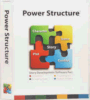 |
Power
Structure - $149.95
An
all-in-one writing environment with built-in word processor that helps
you organize and cross-reference your story development materials.
INCLUDES DVD SET BONUS!
|
|

|
Power
Writer - $99.95
The little
brother of Power Structure includes the essential organization and word
processing tools writers need the most.
|
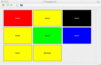 |
Throughline
- Index Cards (Mac) - $19.95
Interactive
index cards - add notes, titles, colors, click and drag to re-arrange.
An essential tool for every writer.
|
 |
Movie
Magic Screenwriter - $149.95
The most
advanced screenwriting software available, Movie Magic is deemed a
"preferred file format" by the Writer's Guild. An
industry standard, MMS is used by professionals and studios around the
world.
|
|

|
Final
Draft - $199.95
Like Movie
Magic Screenwriter, Final Draft is an industry standard, used by many
professional screenwriters and studios around the world.
|
 |
Between
The Lines (Macintosh) - $29.95
The lowest
cost automatic screenplay formatter for Macintosh includes high-end
features such as interactive index cards linked to your script.
|
|

|
 |
12
Hour Writing Course - $19.95
Everything
you need to know about story structure - twelve hours of video on a
single DVD - presented by Dramatica Theory co-creator, Melanie Anne
Phillips.
|
 |
Dramatica
Software Companion - $19.95
More than
four hours of video demonstrations of every key feature in Dramatica,
narrated by the co-creator of Dramatica.
|
 |
StoryWeaving
Tips Book - $19.95
170 pages of
eye-opening essays on story structure, storytelling, finding inspiration
and a wide variety of writing techniques.
|
|
StoryWeaving
Seminar 8 DVD Set - $99.95
14 hours of
video from a live two day course taught by theory co-creator Melanie
Anne Phillips covering Dramatica story structure and StoryWeaver
storytelling.
|
|
StoryWeaving
Seminar Online - $49.95
The same 14
hour program presented in streaming video that you can view online or
download for a permanent copy.
|
|
Dramatica
Theory 2 Hour Audio Program - $19.95
Every key
concept in the Dramatica Theory of Story is fully explained in this
double-CD set.
|
|

|
Writing
Characters of the Opposite Sex - $29.95
A three-hour
audio CD set that explains everything you need to know to create
characters of both sexes that ring absolutely true (and maybe even gain
insight into the communication problems in the real world!)
|
 |
Master
Storyteller Improves Your Writing - $29.95
Become a
better writing with this series of interactive exercises.
|
|

|
How
to Create Great Characters DVD - $19.95
A 90 minute
video program recorded during Dramatica co-creator Melanie Anne
Phillips' live in-person seminar on story structure and storytelling.
|
|

|
Structure
vs. Passion - Audio CD $19.95
The Story
Mind approach to writing uses your own passions to create your story's
structure. It focuses your efforts, clarifies the direction of
your story, and triggers your imagination.
|
|

|
Writing
with the Story Mind - Audio CD - $19.95
Learn how to
psychoanalyze your story's "mind" to uncover and treat
problems with characters, plot, theme, and genre.
|
|

|
|

|
Academic
Prices - Discounts on Select Products
Are you a
student, teacher, or academic staffer? Get the very best price on
select products with these manufacturer sponsored academic discounts!
|
|

|
Package
Deals - Starting at $49.95
Get deep
discounts with these bundles of our most popular writing products.
|
|

|
Writer's
Survival Kit Bonus Package - FREE!
Free with
ANY purchase - Writing software, online writing workshops, writing
seminars on video, story theory book, and much, MUCH more!
|














 Format:
Windows / Mac CD-ROM
Format:
Windows / Mac CD-ROM
