|
|
Software |
StoryWeaver
$29.95

A step by
step approach to story development, from concept to completed story for
your novel or screenplay. More than 200 interactive Story Cards guide
you through the entire process.
Details
and Demo
Dramatica
$149.95

The most
powerful story structuring software available, Dramatica is driven by a
patented "Story Engine" that cross-references your dramatic
choices to ensure a perfect structure.
Details
and Demo
Movie
Magic Screenwriter
$149.95

The most
advanced screenwriting software available, Movie Magic is deemed a
"preferred file format" by the Writer's Guild. An industry
standard, MMS is used by professionals and studios around the world.
Details
and Demo
Throughline
Index Cards
$9.95

Interactive
index cards - Name them, add notes, titles, colors, click and drag to
re-arrange, adjust font, save, export and print. An essential tool for
every writer.
Details
Academic
Discounts
on Select Products

Are you a
student, teacher, or academic staffer? Get the very best price on select
products with these manufacturer sponsored academic discounts!
Details

|
| |

Written by
Melanie Anne Phillips
Based on the Dramatica theory of story
originally developed by Melanie Anne Phillips
and Chris Huntley
How Stories Came to Be
Prologue
Before the final version of "Dramatica - a New Theory of Story"
there was an earlier draft which contained unfininished concepts and additional theory
that was ultimately deemed "too complex". As a result, this material was
never fully developed, was cut from the final version of the book, and has never seen the
light of day -- until now! Recently, a copy of this early draft surfaced in the
theory archives. The following are excerpts from this "lost" text.
CAVEAT:
Because the text that follows was not fully developed, portions may be incomplete,
inaccurate, or actually quite wrong.
It is presented as a look into the history of the development of Dramatica and also as
a source of additional theory concepts that (with further development) may prove useful.
Note about this excerpt:
As we developed the concept of the Story Mind, we began to wonder how it
might have come to be that stories function as analogies to the human mind. Over the
years, we developed a hypothesis which is available in its polished form on the web in an
article entitled "The Story Mind."
The attempt at that explanation which follows is an early effort that
misses some of the key ingredients, but also provides a more emotional perspective on the
topic which was lost in the final, logistically polished version. Although somewhat
inaccurate, I find this embryonic explanation much more intuitive and in a sense more
"charming."
How Stories Came to Be
Any writer who has sought to understand the workings of story is familiar with the
terms "Character", "Plot", "Theme", "Genre",
"Premise", "Act", "Scene", and many others. Although there
is much agreement on the generalities of these concepts, they have proven to be elusive
when precise definitions are attempted. Dramatica presents the first definitive
explanation of exactly what stories are and precisely how they are structured.
The dramatic conventions that form the framework of stories today did not spring fully
developed upon us. Rather, the creation of these conventions was an evolutionary process
dating far into our past. It was not an arbitrary effort, but served specific needs.
Early in the art of communication, knowledge could be exchanged about such things as
where to find food, or how one felt - happy or sad . Information regarding the location or
state of things requires only a description. However, when relating an event or series of
events, a more sophisticated kind of knowledge needs to be communicated.
Tales
Imagine the very first story teller, perhaps a cave dweller who has just returned from
a run-in with a bear. This has been an important event in her life and she desires to
share it. She will not only need to convey the concepts "bear" and
"myself", but must also describe what happened.
Her presentation then, might document what led up to her discovery of the bear, the
interactions between them, and the manner in which she returned safely to tell the tale.
Tale: a statement (fictional or non-fictional) that describes a problem, the methods
employed in the attempt to solve the problem, and how it all came out.
We can imagine why someone would want to tell a tale, but why would others listen?
There are some purely practical reasons: if the storyteller faced a problem and discovered
a way to succeed in it, that experience might someday be useful in the lives of the each
individual in the audience. And if the storyteller didn't succeed, the tale can act as a
warning as to which approaches to avoid.
By listening to a tale, an audience benefits from knowledge they have not gained
directly through their own experience.
So, a tale is a statement documenting an approach to problem solving that provides an
audience with valuable experience.
Stories, Objective and Subjective
When relating her tale, the first storyteller had an advantage she did not have when
she actually experienced the event: the benefit of hindsight. The ability to look back and
re-evaluate her decisions from a more objective perspective allowed her to share a step by
step evaluation of her approach, and an appreciation of the ultimate outcome. In this way,
valid steps could be separated from poorly chosen steps and thereby provide a much more
useful interpretation of the problem solving process than simply whether she ultimately
succeeded or failed.
This objective view might be interwoven with the subjective view, such as when one
says, "I didn't know it at the time, but...." In this manner, the benefit of
objective hindsight can temper the subjective immediacy each step of the way, as it
happens. This provides the audience with an ongoing commentary as to the eventual
correctness of the subjective view. It is this differential between the subjective view
and the objective view that creates the dramatic potential of a story.
Through the Subjective view, the audience can empathize with the uncertainty that the
storyteller felt as she grapples with the problem. Through the Objective view, the
storyteller can argue that her Subjective approach was or was not an appropriate solution.
In short then:
Stories provide two views to the audience:
• A Subjective view that allows the audience to feel as if the story is
happening to them
• An Objective view that furnishes the benefit of hindsight.
The Objective view satisfies our reason, the subjective view satisfies our feelings.
[Lost Theory Book Contents]
Visit
the Dramatica Theory Home Page
Try Dramatica & StoryWeaver Risk
Free*

$179.95
$29.95
*Try either or both for 90 days. Not working for you?
Return for a full refund of your purchase price!
About Dramatica and
StoryWeaver
Hi, I'm Melanie Anne Phillips,
creator of StoryWeaver,
co-creator of Dramatica
and owner of Storymind.com. If you have a moment, I'd like to tell you
about these two story development tools - what each is designed to do, how
each works alone on a different part of story development and how they can be
used together to cover the entire process from concept to completion of your
novel or screenplay.
What They Do
Dramatica is a tool to help you
build a perfect story structure. StoryWeaver is a tool to help you build
your story's world. Dramatica focuses on the underlying logic of your
story, making sure there are no holes or inconsistencies. StoryWeaver
focuses on the creative process, boosting your inspiration and guiding it to add
depth, detail and passion to your story.
How They Do It
Dramatica has the world's only
patented interactive Story Engine™ which cross-references your answers to
questions about your dramatic intent, then finds any weaknesses in your
structure and even suggests the best ways to strengthen them.
StoryWeaver uses a revolutionary new
creative format as you follow more than 200 Story Cards™ step by step through
the story development process. You'll design the people who'll inhabit
your story's world, what happens to them, and what it all means.
How They Work
Together
By itself Dramatic appeals to
structural writers who like to work out all the details of their stories
logically before they write a word. By itself, StoryWeaver appeals to
intuitive writers who like to follow their Muse and develop their stories as
they go.
But, the finished work of a
structural writer can often lack passion, which is where StoryWeaver can help.
And the finished work of an intuitive writer can often lack direction, which is
where Dramatica can help.
So, while each kind of writer will
find one program or the other the most initially appealing, both kinds of
writers can benefit from both programs.
Try Both Programs
Risk Free!
We have a 90
Day Return Policy here at Storymind. Try either or both of these
products and if you aren't completely satisfied we'll cheerfully refund your
purchase price.
Our
Complete Catalog of Products
|

Get
the Writer's Survival Kit Bonus Package
FREE with ANY purchase!
A $300 Value!
|
|
StoryWeaver
- $29.95
Our
Bestseller! A
step by step approach to story development, from concept to completed
story for your novel or screenplay. More than 200 interactive
Story Cards guide you through the entire process.
|
|
Dramatica
Pro - $179.95
Includes
2 Exclusive Bonuses! The
most powerful story structuring software available, Dramatica is driven
by a patented "Story Engine" that cross-references your
dramatic choices to ensure a perfect structure.
|
 |
Dramatica
Writer's DreamKit - $49.95
Little
brother to Dramatica Pro, Writer's DreamKit is built around the same
patented Story Engine - it just tracks fewer story points. So, you
develop the same solid story structure, just with fewer details.
Perfect for beginning writers or those new to Dramatica.
|
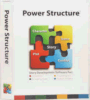 |
Power
Structure - $149.95
An
all-in-one writing environment with built-in word processor that helps
you organize and cross-reference your story development materials.
INCLUDES DVD SET BONUS!
|
|

|
Power
Writer - $99.95
The little
brother of Power Structure includes the essential organization and word
processing tools writers need the most.
|
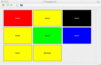 |
Throughline
- Index Cards (Mac) - $19.95
Interactive
index cards - add notes, titles, colors, click and drag to re-arrange.
An essential tool for every writer.
|
|
Movie
Magic Screenwriter - $149.95
The most
advanced screenwriting software available, Movie Magic is deemed a
"preferred file format" by the Writer's Guild. An
industry standard, MMS is used by professionals and studios around the
world.
|
|

|
Final
Draft - $199.95
Like Movie
Magic Screenwriter, Final Draft is an industry standard, used by many
professional screenwriters and studios around the world.
|
 |
Between
The Lines (Macintosh) - $29.95
The lowest
cost automatic screenplay formatter for Macintosh includes high-end
features such as interactive index cards linked to your script.
|
|

|
 |
12
Hour Writing Course - $19.95
Everything
you need to know about story structure - twelve hours of video on a
single DVD - presented by Dramatica Theory co-creator, Melanie Anne
Phillips.
|
 |
Dramatica
Software Companion - $19.95
More than
four hours of video demonstrations of every key feature in Dramatica,
narrated by the co-creator of Dramatica.
|
 |
StoryWeaving
Tips Book - $19.95
170 pages of
eye-opening essays on story structure, storytelling, finding inspiration
and a wide variety of writing techniques.
|
|
StoryWeaving
Seminar 8 DVD Set - $99.95
14 hours of
video from a live two day course taught by theory co-creator Melanie
Anne Phillips covering Dramatica story structure and StoryWeaver
storytelling.
|
|
StoryWeaving
Seminar Online - $49.95
The same 14
hour program presented in streaming video that you can view online or
download for a permanent copy.
|
|
Dramatica
Theory 2 Hour Audio Program - $19.95
Every key
concept in the Dramatica Theory of Story is fully explained in this
double-CD set.
|
|

|
Writing
Characters of the Opposite Sex - $29.95
A three-hour
audio CD set that explains everything you need to know to create
characters of both sexes that ring absolutely true (and maybe even gain
insight into the communication problems in the real world!)
|
 |
Master
Storyteller Improves Your Writing - $29.95
Become a
better writing with this series of interactive exercises.
|
|

|
How
to Create Great Characters DVD - $19.95
A 90 minute
video program recorded during Dramatica co-creator Melanie Anne
Phillips' live in-person seminar on story structure and storytelling.
|
|

|
Structure
vs. Passion - Audio CD $19.95
The Story
Mind approach to writing uses your own passions to create your story's
structure. It focuses your efforts, clarifies the direction of
your story, and triggers your imagination.
|
|

|
Writing
with the Story Mind - Audio CD - $19.95
Learn how to
psychoanalyze your story's "mind" to uncover and treat
problems with characters, plot, theme, and genre.
|
|

|
|
|
Academic
Prices - Discounts on Select Products
Are you a
student, teacher, or academic staffer? Get the very best price on
select products with these manufacturer sponsored academic discounts!
|
|

|
Package
Deals - Starting at $49.95
Get deep
discounts with these bundles of our most popular writing products.
|
|

|
Writer's
Survival Kit Bonus Package - FREE!
Free with
ANY purchase - Writing software, online writing workshops, writing
seminars on video, story theory book, and much, MUCH more!
|
| |
|












 Format:
Windows / Mac CD-ROM
Format:
Windows / Mac CD-ROM
