|


|
Our Bestseller!
StoryWeaver
Write
Your Novel
or Screenplay
Step by Step

$29.95
|

|
|

"Ability"
What's "Ability" have to do
with story structure?
If you look in Dramatica's "Periodic Table of Story Elements"
chart (you can download a free PDF of the chart at http://storymind.com/free-downloads/ddomain.pdf )
you'll find the "ability" in one of the little squares.
Look in the "Physics" class in the upper left-hand corner.
You'll find it in a "quad" of four items, "Knowledge,
Thought, Ability and Desire".
In this article I'm going to talk about how Dramatica uses the term
"ability" and how it applies not only to story structure and
characters but to real people, real life and psychology as well.
To begin with, a brief word about the Dramatica chart itself. The
chart is sort of like a Rubik's Cube. It holds all the elements
which must appear in every complete story to avoide holes.
Conceptually, you can twist it and turn it, just like a Rubik's Cube,
and when you do, it is like winding up a clock - you create dramatic
potential.
How is this dramatic potential created? The chart represents all
the categories of things we think about. Notice that the chart is
nested, like wheels within wheels. That's the way our mind's work.
And if we are to make a solid story structure with no holes, we have to
make sure all ways of thinking about the story's central problem or
issues are covered.
So, the chart is really a model of the mind. When you twist it and
turn it represents the kinds of stress (and experience) we encounter in
everyday life. Sometimes things get wound up as tight as they can.
And this is where a story always starts. Anything before that
point is backstory, anything after it is story.
The story part is the process of unwinding that tension. So why
does a story feel like tension is building, rather than lessoning?
This is because stories are about the forces that bring a person to
chane or, often, to a point of change.
As the story mind unwinds, it puts more and more pressure on the main
character (who may be gradually changed by the process or may remain
intransigent until he changes all at once). It's kind of like the
forces that create earthquakes. Tectonic plates push against
each other driven by a background force (the mantle). That force
is described by the wound up Dramatica chart of the story mind.
Sometimes, in geology, this force gradually raises or lowers land in the
two adjacent plate. Other times it builds up pressure until things
snap all at once in an earthquake. So too in psychology, people
(characters) are sometimes slowly changed by the gradual application of
pressure as the story mind clock is unwinding; other times that pressure
applied by the clock mechanism just builds up until the character snaps
in Leap Of Faith - that single "moment of truth" in which a
character must decide either to change his ways or stick by his guns
believing his current way is stronger than the pressure bought to bear -
he believes he just has to outlast the forces against him.
Sometimes he's right to change, sometimes he's right to remain
steadfast, and sometimes he's wrong. But either way, in the end,
the clock has unwound and the potential has been balanced.
Hey, what happened to "ability"? Okay, okay, I'm getting
to that....
The chart (here we go again!) is filled with semantic terms - things
like Hope and Physics and Learning and Ability. If you go down to
the bottom of the chart in the PDF you'll see a three-dimensional
representation of how all these terms are stacked together. In the
flat chart, they look like wheels within wheels. In the 3-D
version, they look like levels.
These "levels" represent degrees of detail in the way the mind
works. At the most broadstroke level (the top) there are just four
items - Universe, Physics, Mind and Psychology. They are kind of
like the Primary Colors of the mind - the Red, Blue, Green and
Saturation (effectively the addition of something along the black/white
gray scale).
Those for items in additive color theory are four categories describing
what can create a continuous spectrum. In a spectrum is
really kind of arbitrary where you draw the line between red and blue.
Similarly, Universe, Mind, Physics and Psychology are specific primary
considerations of the mind.
Universe is the external state of things - our situation or envirnoment.
Mind is the internal state - an attitude, fixation or bias.
Physics looks at external activities - processes and mechanisms.
Psychology looks at internal activities - manners of thinking in logic
and feeling.
Beneath that top level of the chart are three other levels. Each
one provides a greater degree of detail on how the mind looks at the
world and at itself. It is kind of like adding "Scarlet"
and "Cardinal" as subcategories to the overall concept of
"Red".
Now the top level of the Dramatica chart describe the structural aspects
of "Genre" Genre is the most broadstroke way of looking
at a story's structure. The next level down has a bit more
dramatic detail and describes the Plot of a story. The third level
down maps out Theme, and the bottom level (the one with the most detail)
explores the nature of a story's Characters.
So there you have the chart from the top down, Genre, Plot, Theme and
Characters. And as far as the mind goes, it represents the wheels
within wheels and the sprectrum of how we go about considering things.
In fact, we move all around that chart when we try to solve a problem.
But the order is not arbitrary. The mind has to go through certain
"in-betweens" to get from one kind of consideration to another
or from one emotion to another. You see this kind of thing in the
stages of grief and even in Freud's psycho-sexual stages of development.
All that being said now, we finally return to Ability - the actual topic
of this article. You'll find Ability, then, at the very bottom of
the chart - in the Characters level - in the upper left hand corner of
the Physics class. In this article I won't go into why it is in
Physics or why it is in the upper left, but rest assured I'll get to
that eventually in some article or other.
Let's now consider "Ability" in its "quad" of four
Character Elements. The others are Knowledge, Thought, Ability and
Desire. I really don't have space in this article to go into
detail about them at this time, but suffice it to say that Knowledge,
Thought, Ability and Desire are the internal equivalents of Universe,
Mind, Physics and Pyschology. They are the conceptual
equivalents of Mass, Energy, Space and Time. (Chew on that
for awhile!)
So the smallest elements are directly connect (conceptually) to the
largest in the chart. This represents what we call the "size
of mind constant" which is what determines the scope of an argument
necessary to fill the minds of readers or an audience. In short,
there is a maximum depth of detail one can perceive while still holding
the "big picture" in one's mind at the very same time.
Ability - right....
Ability is not what you can do. It is what you are
"able" to do. What's the difference? What you
"can" do is essentially your ability limited by your desire.
Ability describes the maximum potential that might be accomplished.
But people are limited by what they should do, what they feel obligated
to do, and what they want to do. If you take all that into
consideration, what's left is what a person actually
"can" do.
In fact, if we start adding on limitations you move from
Ability to Can and up to even higher levels of "justification"
in which the essential qualities of our minds, "Knowledge, Thought,
Ability and Desire" are held in check by extended considerations
about the impact or ramifications of acting to our full potential.
One quad greater in justification you find "Can, Need, Want, and
Should" in Dramatica's story mind chart. Then it gets even
more limited by Responsibility, Obligation, Commitment and
Rationalization. Finally we end up "justifying" so much
that we are no longer thinking about Ability (or Knowledge or Thought or
Desire) but about our "Situation, Circumstance, Sense of Self and
State of Being". That's about as far away as you can get from
the basic elements of the human mind and is the starting point of where
stories begin when they are fully wound up. (You'll find all of
these at the Variation Level in the "Psychology" class in the
Dramatica chart, for they are the kinds of issues that most directly
affect each of our own unique brands of our common human psychology.
A story begins when the Main Character is stuck up in that highest level
of justification. Nobody gets there because they are stupid or
mean. They get there because their unique life experience has
brought them repeated exposures to what appear to be real connections
between things like, "One bad apple spoils the bunch" or
"Where there's smoke , there's fire."
These connections, such things as - that one needs to adopt a
certain attitude to succeed or that a certain kind of person is always
lazy or dishonest - these things are not always universally true, but
may have been universally true in the Main Character's experience.
Really, its how we all build up our personalities. We all share
the same basic psychology but how it gets "wound up" by
experience determines how we see the world. When we get wound up
all the way, we've had enough experience to reach a conclusion that
things are always "that way" and to stop considering the
issue. And that is how everything from "winning drive"
to "prejudice" is formed - not by ill intents or a dull mind
buy by the fact that no two life experiences are the same.
The conclusions we come to, based on our justifications, free out minds
to not have to reconsider every connection we see. If we had to,
we'd become bogged down in endlessly reconsidering everything, and that
just isn't a good survival trait if you have to make a quick decision
for fight or flight.
So, we come to certain justification and build upon those with others
until we have established a series of mental dependencies and
assumptions that runs so deep we can't see the bottom of it - the one
bad brick that screwed up the foundation to begin with. And that's
why psychotherapy takes twenty years to reach the point a Main Character
can reach in a two hour movie or a two hundred page book.
Now we see how Ability (and all the other Dramatica terms) fit into
story and into psychology. Each is just another brick in the wall.
And each can be at any level of the mind and at any level of
justification. So, Ability might be the problem in one story (the
character has too much or too little of it) or it might be the solution
in another (by discovering an ability or coming to accept one lacks a
certain ability the story's problem - or at least the Main Character's
personal problem - can be solved). Ability might be the thematic
topic of one story and the thematic counterpoint of another (more on
this in other articles).
Ability might crop up in all kinds of ways, but the important thing to
remember is that wherever you find it, however you use it, it represents
the maximum potential, not necessarily the practical limit that can be
actually applied.
Well, enough of this. To close things off, here's the Dramatica
Dictionary description of the world Ability that Chris and I worked out
some twenty years ago, straight out of the Dramatica diction (available
online at http://storymind.com/dramatica/dictionary/index.htm
:
Ability • Most terms in Dramatica are used to mean only one thing.
Thought, Knowledge, Ability, and Desire, however, have two uses each,
serving both as Variations and Elements. This is a result of their role
as central considerations in both Theme and Character
[Variation] • dyn.pr. Desire<-->Ability • being suited to
handle a task; the innate capacity to do or be • Ability describes the
actual capacity to accomplish something. However, even the greatest
Ability may need experience to become practical. Also, Ability may be
hindered by limitations placed on a character and/or limitations imposed
by the character upon himself. • syn. talent, knack, capability,
innate capacity, faculty, inherant proficiency
[Element] • dyn.pr. Desire<-->Ability • being suited to handle
a task; the innate capacity to do or be • An aspect of the Ability
element is an innate capacity to do or to be. This means that some
Abilities pertain to what what can affect physically and also what one
can rearrange mentally. The positive side of Ability is that things can
be done or experienced that would otherwise be impossible. The negative
side is that just because something can be done does not mean it should
be done. And, just because one can be a certain way does not mean it is
beneficial to self or others. In other words, sometimes Ability is more
a curse than a blessing because it can lead to the exercise of
capacities that may be negative • syn. talent, knack, capability,
innate capacity, faculty, inherant proficiency
Visit
the Dramatica Theory Home Page
Try Dramatica & StoryWeaver Risk
Free*

$179.95
$29.95
*Try either or both for 90 days. Not working for you?
Return for a full refund of your purchase price!
About Dramatica and
StoryWeaver
Hi, I'm Melanie Anne Phillips,
creator of StoryWeaver,
co-creator of Dramatica
and owner of Storymind.com. If you have a moment, I'd like to tell you
about these two story development tools - what each is designed to do, how
each works alone on a different part of story development and how they can be
used together to cover the entire process from concept to completion of your
novel or screenplay.
What They Do
Dramatica is a tool to help you
build a perfect story structure. StoryWeaver is a tool to help you build
your story's world. Dramatica focuses on the underlying logic of your
story, making sure there are no holes or inconsistencies. StoryWeaver
focuses on the creative process, boosting your inspiration and guiding it to add
depth, detail and passion to your story.
How They Do It
Dramatica has the world's only
patented interactive Story Engine™ which cross-references your answers to
questions about your dramatic intent, then finds any weaknesses in your
structure and even suggests the best ways to strengthen them.
StoryWeaver uses a revolutionary new
creative format as you follow more than 200 Story Cards™ step by step through
the story development process. You'll design the people who'll inhabit
your story's world, what happens to them, and what it all means.
How They Work
Together
By itself Dramatic appeals to
structural writers who like to work out all the details of their stories
logically before they write a word. By itself, StoryWeaver appeals to
intuitive writers who like to follow their Muse and develop their stories as
they go.
But, the finished work of a
structural writer can often lack passion, which is where StoryWeaver can help.
And the finished work of an intuitive writer can often lack direction, which is
where Dramatica can help.
So, while each kind of writer will
find one program or the other the most initially appealing, both kinds of
writers can benefit from both programs.
Try Both Programs
Risk Free!
We have a 90
Day Return Policy here at Storymind. Try either or both of these
products and if you aren't completely satisfied we'll cheerfully refund your
purchase price.
Our
Complete Catalog of Products
|

Get
the Writer's Survival Kit Bonus Package
FREE with ANY purchase!
A $300 Value!
|
|
StoryWeaver
- $29.95
Our
Bestseller! A
step by step approach to story development, from concept to completed
story for your novel or screenplay. More than 200 interactive
Story Cards guide you through the entire process.
|
 |
Dramatica
Pro - $179.95
Includes
2 Exclusive Bonuses! The
most powerful story structuring software available, Dramatica is driven
by a patented "Story Engine" that cross-references your
dramatic choices to ensure a perfect structure.
|
 |
Dramatica
Writer's DreamKit - $49.95
Little
brother to Dramatica Pro, Writer's DreamKit is built around the same
patented Story Engine - it just tracks fewer story points. So, you
develop the same solid story structure, just with fewer details.
Perfect for beginning writers or those new to Dramatica.
|
 |
Power
Structure - $149.95
An
all-in-one writing environment with built-in word processor that helps
you organize and cross-reference your story development materials.
INCLUDES DVD SET BONUS!
|
|

|
Power
Writer - $99.95
The little
brother of Power Structure includes the essential organization and word
processing tools writers need the most.
|
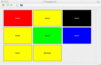 |
Throughline
- Index Cards (Mac) - $19.95
Interactive
index cards - add notes, titles, colors, click and drag to re-arrange.
An essential tool for every writer.
|
 |
Movie
Magic Screenwriter - $149.95
The most
advanced screenwriting software available, Movie Magic is deemed a
"preferred file format" by the Writer's Guild. An
industry standard, MMS is used by professionals and studios around the
world.
|
|

|
Final
Draft - $199.95
Like Movie
Magic Screenwriter, Final Draft is an industry standard, used by many
professional screenwriters and studios around the world.
|
 |
Between
The Lines (Macintosh) - $29.95
The lowest
cost automatic screenplay formatter for Macintosh includes high-end
features such as interactive index cards linked to your script.
|
|

|
 |
12
Hour Writing Course - $19.95
Everything
you need to know about story structure - twelve hours of video on a
single DVD - presented by Dramatica Theory co-creator, Melanie Anne
Phillips.
|
 |
Dramatica
Software Companion - $19.95
More than
four hours of video demonstrations of every key feature in Dramatica,
narrated by the co-creator of Dramatica.
|
 |
StoryWeaving
Tips Book - $19.95
170 pages of
eye-opening essays on story structure, storytelling, finding inspiration
and a wide variety of writing techniques.
|
|
StoryWeaving
Seminar 8 DVD Set - $99.95
14 hours of
video from a live two day course taught by theory co-creator Melanie
Anne Phillips covering Dramatica story structure and StoryWeaver
storytelling.
|
|
StoryWeaving
Seminar Online - $49.95
The same 14
hour program presented in streaming video that you can view online or
download for a permanent copy.
|
|
Dramatica
Theory 2 Hour Audio Program - $19.95
Every key
concept in the Dramatica Theory of Story is fully explained in this
double-CD set.
|
|

|
Writing
Characters of the Opposite Sex - $29.95
A three-hour
audio CD set that explains everything you need to know to create
characters of both sexes that ring absolutely true (and maybe even gain
insight into the communication problems in the real world!)
|
 |
Master
Storyteller Improves Your Writing - $29.95
Become a
better writing with this series of interactive exercises.
|
|

|
How
to Create Great Characters DVD - $19.95
A 90 minute
video program recorded during Dramatica co-creator Melanie Anne
Phillips' live in-person seminar on story structure and storytelling.
|
|

|
Structure
vs. Passion - Audio CD $19.95
The Story
Mind approach to writing uses your own passions to create your story's
structure. It focuses your efforts, clarifies the direction of
your story, and triggers your imagination.
|
|

|
Writing
with the Story Mind - Audio CD - $19.95
Learn how to
psychoanalyze your story's "mind" to uncover and treat
problems with characters, plot, theme, and genre.
|
|

|
|

|
Academic
Prices - Discounts on Select Products
Are you a
student, teacher, or academic staffer? Get the very best price on
select products with these manufacturer sponsored academic discounts!
|
|

|
Package
Deals - Starting at $49.95
Get deep
discounts with these bundles of our most popular writing products.
|
|

|
Writer's
Survival Kit Bonus Package - FREE!
Free with
ANY purchase - Writing software, online writing workshops, writing
seminars on video, story theory book, and much, MUCH more!
|
|
|

|
Our Bestseller!
StoryWeaver Write Your
Novel
or Screenplay
Step by Step
$29.95
|
|







 Format:
Windows / Mac CD-ROM
Format:
Windows / Mac CD-ROM