|
|
Software |
StoryWeaver
$29.95

A step by
step approach to story development, from concept to completed story for
your novel or screenplay. More than 200 interactive Story Cards guide
you through the entire process.
Details
and Demo
Dramatica
$149.95

The most
powerful story structuring software available, Dramatica is driven by a
patented "Story Engine" that cross-references your dramatic
choices to ensure a perfect structure.
Details
and Demo
Movie
Magic Screenwriter
$149.95

The most
advanced screenwriting software available, Movie Magic is deemed a
"preferred file format" by the Writer's Guild. An industry
standard, MMS is used by professionals and studios around the world.
Details
and Demo
Throughline
Index Cards
$9.95
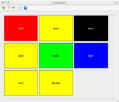
Interactive
index cards - Name them, add notes, titles, colors, click and drag to
re-arrange, adjust font, save, export and print. An essential tool for
every writer.
Details
Academic
Discounts
on Select Products

Are you a
student, teacher, or academic staffer? Get the very best price on select
products with these manufacturer sponsored academic discounts!
Details

|
| |
Chapter 33
Storytelling, Storyweaving
& Structure
STORYWEAVING and STRUCTURE
Part of the purpose of Storyweaving is to communicate the underlying dramatic structure or
message of a story. The other part is to make that process of communication as interesting
and/or effective as possible. In addition, the manner in which the structure is expressed
can have a great impact on how the audience receives the message which extends far beyond
simply understanding the message.
Our first job then is the somewhat mundane task of describing how a structure can been
communicated through exposition. Once we have laid this foundation, we can cut ourselves
free to consider the enjoyable aspects of using weaving techniques to build suspense,
create comedy, shock an audience, and generally have a good time putting the frosting on
the cake.
Space and Time Together Again
By now, you should be familiar with the concept that part of a story's structure is
made up of Static Appreciations and part consists of Progressive Appreciations. It is here
in Storyweaving that we must find a way to blend the two together so all aspects of our
story can unfold in concert.
In the Plot section of Storyencoding, we learned how the four structural and three dynamic
acts of each throughline could be seen as four signposts that defined three journeys.
Although there are many ways we might weave all of this into a story, there is one very
straightforward method that is useful to illustrate the basic concepts.
First of all, think of each signpost and each journey not as an act, but as a Storyweaving
scene. From this perspective, we can see that there will be twenty-eight scenes in our
story (four signposts and three journeys in each of four throughlines). If we were to
write the Type of each signpost on a card and then write the Types that describe the
beginning and ending of each journey on a card, we would end up with twenty-eight cards,
each of which would represent a Storyweaving scene. (It would be a good idea to put all
the signposts and journeys from each throughline on a different color card so we could
easily tell them apart.)
Now, we have in front of us twenty-eight scenes. Each one has a job to do, from a
structural point of view. Each one must express to an audience the appreciation it
represents. This is the process of encoding the signposts and journeys as we did in the
Plot section of Storyencoding. We might write that encoding right on each card so that we
can tell at a glance what is going to be happening in that scene.
It is at this point we can begin to Storyweave. What we want to determine is the order in
which those twenty-eight scenes will be played out for our audience. A good rule of thumb
for a straightforward story is that the scenes in each throughline ought to be kept in
order. So, Signpost 1 will be followed by Journey 1 which is in turn followed by Signpost
2 and Journey 2, etc.
Now we run into a bit of a sticky wicket: because all four throughlines are actually
happening simultaneously from a structural point of view, we would have to have all four
Signposts 1 from all four throughlines occur at the same time! Of course, this might be
difficult unless we were making a movie and used a four-way split screen. Still, some of
our most sophisticated authors find ways use a single event to represent more than one
dramatic point at a time. This technique requires experience and inspiration.
A much more practical approach for those using Dramatica for the first time is to put one
of the Signposts 1 first, then another, a third, and finally the last. Which of the four
Signposts 1 goes first is completely up to our personal tastes, no limitations whatsoever.
Although this is not as complex as describing all four throughlines at once, it is a much
easier pattern to weave and has the added advantage of providing better clarity of
communication to our audience.
Next, we will want to Storyweave all four Journeys 1. We might decide to move through them
in the same order as the Signposts or to choose a completely different sequence. Again,
that has no structural impact at all, and is wholly up to our creative whims.
Just because we have absolute freedom, however, does not mean our decision will have no
effect on our audience. In fact, the order in which each scene crops up determines which
information is a first impression and which is a modifier. It is a fact of
human psychology that first impressions usually carry more weight than anything
that follows. It takes a lot of undoing to change that initial impact. This is why it is
usually better to introduce the Main Character's Signpost 1 before the Obstacle Character
Signpost 1. Otherwise, the audience will latch onto the Obstacle Character and won't
switch allegiance until much farther into the story. Clearly, if our weaving has brought
the audience to think the Obstacle Character is the Main Character, we have failed to
convey the real structure and meaning of our story. So, just because we have freedom here
doesn't mean we won't be held accountable.
Using the technique described above, we could order all of the Signposts and Journeys for
all four throughlines until we have established a Storyweaving sequence for all
twenty-eight scenes.
Before we move on to the next step of this introduction to building Storyweaving scenes,
we can loosen up our constraints even a bit further. We don't have to present all four
Signposts and then all four Journeys. Together, each Signpost and Journey pair moves a
throughline from where it starts right up to the edge of the next act break. Each pair
feels to an audience as if they belong in the first act for that throughline. Therefore,
as long as the Signposts precede their corresponding Journeys, the order of exposition can
stick with one throughline for both Signpost and Journey or jump from a Signpost to
another throughline before returning to the corresponding Journey.
Taking this more liberal approach, we might begin with Main Character Signpost 1 and
Journey 1 (as illustrated below), then show Objective Story Signpost 1, then Obstacle
Character Signpost 1, Objective Story Journey 1, Subjective Story Signpost 1 and Journey
1, and end with Obstacle Character Journey 1. In this manner, the Signposts and Journeys
in each throughline stay in order, but we have much more latitude in blending the four
throughlines together.
Storyweaving Static Appreciations
By now, we have let our feelings be our guide in establishing a sequence for the
twenty-eight Storyweaving scenes. Our next task is to figure out how to illustrate all of
our remaining appreciations within those scenes.
One of the first things we might notice is that the Domain of each throughline is probably
already expressed in the kinds of material we encoded for each Signpost and Journey. That
is because the Types are simply a more detailed breakdown within each Domain. All the
remaining appreciations, however, will probably have to be addressed directly.
Since we have already woven all the crucial Progressive Appreciations into our scenes, the
rest are Static Appreciations, and they all share one common quality: they must
show up at least once, but can show up as many more times as you like. Again, we have a
lot of freedom here. As long as we illustrate each appreciation somewhere, we have
fulfilled our obligation to our structure. Anything beyond that is just technique that may
make the story experience for our audience a more involving one.
So, let's take Goal. We might spell out the Goal in the very first Storyweaving scene and
never mention it again. Hitchcock often did this with his famous "MacGuffin",
which was simply seen as an excuse to get the chase started. Or, we might bring up the
Goal once per act to make sure our audience doesn't lose sight of what the story is all
about. In fact, that is another good rule of thumb: even though once will do it, it is
often best to remind the audience of each Static Appreciation once per act. As we shall
later see, this concept forms the basis of The Rule of Threes, which is a very handy
writer's technique.
Another thing we might do with a Static Appreciation is hint at it, provide pieces of
information about it, but never actually come out and say it. In this manner, the audience
enjoys the process of figuring things out for itself. Since we are obligated to illustrate
our structure, however, we better make sure that by the end of the story, the audience has
enough pieces to get the point.
For each kind of Static Appreciation author's have created many original way in which they
might be woven into a scene through action, dialogue, visuals, even changing the color of
type in a book. We suggest making a list of all your appreciations and then peppering them
into your scenes in the most interesting and non-cliché manner you can. Even if you
aren't overly clever about some of them, at least the structure has been served.
Storyweaving Characters
Lastly, a word about weaving characters into your story. In this regard, there is a huge
difference between weaving a Subjective Character and an Objective Character. In fact, at
this juncture the weaving of Subjective Characters is much easier. Just through creating
scenes based on the Signposts and Journeys in the Main and Obstacle Character
Throughlines, much of their character has been woven into the story. Then, by illustrating
these character's Static Appreciations the job pretty much finishes itself.
Objective Characters, however, are another matter altogether. Objective Characters have
functions, and therefore to be woven into a story they must exercise those functions. With
archetypes it is a relatively easy affair. There are eight archetypes. Each must be introduced
so the audience knows what function they represent. Each must be dismissed so the
audience knows how they ended up. And, each must interact to show the audience
which problem solving techniques work better than others. Introductions, Interactions, and
Dismissals: another Rule of Threes again.
The most obvious and important interactions between archetypal characters occur between
dynamic pairs, such as the Protagonist and Antagonist or Reason and Emotion. The two sides
of each argument between functions must be played against each other to show which
archetype fares better.
In addition, each interaction must go through the three steps of development: set-up,
conflict, and resolution. This means that the argument over function between each dynamic
pair of archetypes must first be established. Then, the approaches must actually come into
conflict. Finally, one of the two opponents must be shown to better the other.
Putting all this together, we have eight introductions, eight dismissals, and four
interactions with three steps in each. This amounts to twenty-eight character events
that must occur in a story using archetypes. As one might suspect, with twenty-eight
character events and twenty-eight Storyweaving scenes, it dovetails nicely to put one
character event in each Storyweaving scene.
Now, you don't have to do this. It's just one simple way of getting the whole job done. In
keeping with this kind of approach, you might choose to touch on theme in each of the
scenes, and explore at least one aspect of a Static Appreciation in every scene as well.
This would certainly make sure the entire structure was related. But it also runs the risk
of creating a monotone feel to your story.
Loading up one scene with many appreciations, then clearing the boards to concentrate on
only one, can liven up the party. In addition, all of this has been based on an assumption
of one Signpost or Journey per Storyweaving scene. Although that is the simple way to
Storyweave, there are many more ways to convey the structure of a story. Let's take a look
at some of them.
Proceed
to the Next Section of the Book-->
How to Order Dramatica:
A New Theory of Story
Back to
the Table of Contents
Back to the Dramatica Home Page
Copyright 1996, Screenplay Systems, Inc.
The Dramatica theory was developed by Melanie Anne Phillips and Chris Huntley
Chief Architect of the Dramatica software is Stephen
Greenfield
Dramatica is a registered trademark of Screenplay Systems Incorporated
Visit
the Dramatica Theory Home Page
Try Dramatica & StoryWeaver Risk
Free*

$179.95
$29.95
*Try either or both for 90 days. Not working for you?
Return for a full refund of your purchase price!
About Dramatica and
StoryWeaver
Hi, I'm Melanie Anne Phillips,
creator of StoryWeaver,
co-creator of Dramatica
and owner of Storymind.com. If you have a moment, I'd like to tell you
about these two story development tools - what each is designed to do, how
each works alone on a different part of story development and how they can be
used together to cover the entire process from concept to completion of your
novel or screenplay.
What They Do
Dramatica is a tool to help you
build a perfect story structure. StoryWeaver is a tool to help you build
your story's world. Dramatica focuses on the underlying logic of your
story, making sure there are no holes or inconsistencies. StoryWeaver
focuses on the creative process, boosting your inspiration and guiding it to add
depth, detail and passion to your story.
How They Do It
Dramatica has the world's only
patented interactive Story Engine™ which cross-references your answers to
questions about your dramatic intent, then finds any weaknesses in your
structure and even suggests the best ways to strengthen them.
StoryWeaver uses a revolutionary new
creative format as you follow more than 200 Story Cards™ step by step through
the story development process. You'll design the people who'll inhabit
your story's world, what happens to them, and what it all means.
How They Work
Together
By itself Dramatic appeals to
structural writers who like to work out all the details of their stories
logically before they write a word. By itself, StoryWeaver appeals to
intuitive writers who like to follow their Muse and develop their stories as
they go.
But, the finished work of a
structural writer can often lack passion, which is where StoryWeaver can help.
And the finished work of an intuitive writer can often lack direction, which is
where Dramatica can help.
So, while each kind of writer will
find one program or the other the most initially appealing, both kinds of
writers can benefit from both programs.
Try Both Programs
Risk Free!
We have a 90
Day Return Policy here at Storymind. Try either or both of these
products and if you aren't completely satisfied we'll cheerfully refund your
purchase price.
Our
Complete Catalog of Products
|

Get
the Writer's Survival Kit Bonus Package
FREE with ANY purchase!
A $300 Value!
|
|
StoryWeaver
- $29.95
Our
Bestseller! A
step by step approach to story development, from concept to completed
story for your novel or screenplay. More than 200 interactive
Story Cards guide you through the entire process.
|
|
Dramatica
Pro - $179.95
Includes
2 Exclusive Bonuses! The
most powerful story structuring software available, Dramatica is driven
by a patented "Story Engine" that cross-references your
dramatic choices to ensure a perfect structure.
|
 |
Dramatica
Writer's DreamKit - $49.95
Little
brother to Dramatica Pro, Writer's DreamKit is built around the same
patented Story Engine - it just tracks fewer story points. So, you
develop the same solid story structure, just with fewer details.
Perfect for beginning writers or those new to Dramatica.
|
 |
Power
Structure - $149.95
An
all-in-one writing environment with built-in word processor that helps
you organize and cross-reference your story development materials.
INCLUDES DVD SET BONUS!
|
|

|
Power
Writer - $99.95
The little
brother of Power Structure includes the essential organization and word
processing tools writers need the most.
|
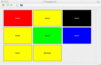 |
Throughline
- Index Cards (Mac) - $19.95
Interactive
index cards - add notes, titles, colors, click and drag to re-arrange.
An essential tool for every writer.
|
|
Movie
Magic Screenwriter - $149.95
The most
advanced screenwriting software available, Movie Magic is deemed a
"preferred file format" by the Writer's Guild. An
industry standard, MMS is used by professionals and studios around the
world.
|
|

|
Final
Draft - $199.95
Like Movie
Magic Screenwriter, Final Draft is an industry standard, used by many
professional screenwriters and studios around the world.
|
 |
Between
The Lines (Macintosh) - $29.95
The lowest
cost automatic screenplay formatter for Macintosh includes high-end
features such as interactive index cards linked to your script.
|
|

|
 |
12
Hour Writing Course - $19.95
Everything
you need to know about story structure - twelve hours of video on a
single DVD - presented by Dramatica Theory co-creator, Melanie Anne
Phillips.
|
 |
Dramatica
Software Companion - $19.95
More than
four hours of video demonstrations of every key feature in Dramatica,
narrated by the co-creator of Dramatica.
|
 |
StoryWeaving
Tips Book - $19.95
170 pages of
eye-opening essays on story structure, storytelling, finding inspiration
and a wide variety of writing techniques.
|
|
StoryWeaving
Seminar 8 DVD Set - $99.95
14 hours of
video from a live two day course taught by theory co-creator Melanie
Anne Phillips covering Dramatica story structure and StoryWeaver
storytelling.
|
|
StoryWeaving
Seminar Online - $49.95
The same 14
hour program presented in streaming video that you can view online or
download for a permanent copy.
|
|
Dramatica
Theory 2 Hour Audio Program - $19.95
Every key
concept in the Dramatica Theory of Story is fully explained in this
double-CD set.
|
|

|
Writing
Characters of the Opposite Sex - $29.95
A three-hour
audio CD set that explains everything you need to know to create
characters of both sexes that ring absolutely true (and maybe even gain
insight into the communication problems in the real world!)
|
 |
Master
Storyteller Improves Your Writing - $29.95
Become a
better writing with this series of interactive exercises.
|
|

|
How
to Create Great Characters DVD - $19.95
A 90 minute
video program recorded during Dramatica co-creator Melanie Anne
Phillips' live in-person seminar on story structure and storytelling.
|
|

|
Structure
vs. Passion - Audio CD $19.95
The Story
Mind approach to writing uses your own passions to create your story's
structure. It focuses your efforts, clarifies the direction of
your story, and triggers your imagination.
|
|

|
Writing
with the Story Mind - Audio CD - $19.95
Learn how to
psychoanalyze your story's "mind" to uncover and treat
problems with characters, plot, theme, and genre.
|
|

|
|
|
Academic
Prices - Discounts on Select Products
Are you a
student, teacher, or academic staffer? Get the very best price on
select products with these manufacturer sponsored academic discounts!
|
|

|
Package
Deals - Starting at $49.95
Get deep
discounts with these bundles of our most popular writing products.
|
|

|
Writer's
Survival Kit Bonus Package - FREE!
Free with
ANY purchase - Writing software, online writing workshops, writing
seminars on video, story theory book, and much, MUCH more!
|
| |
|














 Format:
Windows / Mac CD-ROM
Format:
Windows / Mac CD-ROM
