|
|
Software |
StoryWeaver
$29.95

A step by
step approach to story development, from concept to completed story for
your novel or screenplay. More than 200 interactive Story Cards guide
you through the entire process.
Details
and Demo
Dramatica
$149.95

The most
powerful story structuring software available, Dramatica is driven by a
patented "Story Engine" that cross-references your dramatic
choices to ensure a perfect structure.
Details
and Demo
Movie
Magic Screenwriter
$149.95

The most
advanced screenwriting software available, Movie Magic is deemed a
"preferred file format" by the Writer's Guild. An industry
standard, MMS is used by professionals and studios around the world.
Details
and Demo
Throughline
Index Cards
$9.95
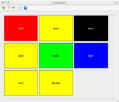
Interactive
index cards - Name them, add notes, titles, colors, click and drag to
re-arrange, adjust font, save, export and print. An essential tool for
every writer.
Details
Academic
Discounts
on Select Products

Are you a
student, teacher, or academic staffer? Get the very best price on select
products with these manufacturer sponsored academic discounts!
Details

|
| |
Chapter 16
The Elements of Structure
Plot
Plot vs. Storyweaving
A common mistake made when considering plot is to assume that plot refers to the sequence
of events in a finished story. A more accurate view considers that there is a difference
between the progression of events in a story's structure, and the order in which these are
revealed to an audience.
As an example of the difference between the two, we can look to the novel The Bridge of
San Luis Rey by Thornton Wilder. The book opens with five travelers falling to their
deaths as the bridge they are crossing collapses. The remainder of the book documents how
each of the travelers came to be on that bridge at that time. Clearly, the progression of
events for the characters was quite different than the order of revelation granted to the
audience.
In contrast, the novel Slaughterhouse Five by Kurt Vonnegut Jr. follows the
adventures of a Main Character who lives his life out of chronological order. In this
case, the mixed-up progression of events is part of the plot's structure, not
simply part of the storytelling.
The key difference between these two aspects of plot is that there is an internal logic to
the plot's structure from the character's point of view and there is an order in which
that logic is revealed to the audience.
Looking toward motion pictures for examples, films such as Pulp Fiction or Remains
of the Day present their plots in quite a different order than the events actually
occurred. In each of these stories, there is an internal logic to the sequence of events
as they occurred in the structure. Then, that sequence is mixed up in order. This new
arrangement has a completely different affect on how an audience will respond to each
story, yet does not alter the internal logic at all. In other words, if Pulp Fiction
or Remains of the Day were re-edited to reveal the plot in chronological order, the
message of the story's structure would remain the same, but the viewing experience for the
audience would be completely changed.
A prime example of this kind of impact shift can be seen in the film and video versions of
the movie, Once Upon a Time in America. The story explores the changing
relationships of a group of friends from their days as poor children during the Depression
to their ultimate stations in life as old men in today's society. In its original
theatrical release, episodes from several different periods in their long history together
were jumbled up, so that the audience would see them as old men, then young boys, old men
again, and then teenagers. A large part of the enjoyment in watching this film was to try
and sort out how one thing would eventually lead to another, and also to determine why
some expected things didn't happen after all. In a sense, viewing the movie was like
assembling a jigsaw puzzle.
In the video release, however, the story was re-edited to chronological order. All the
same pieces were there, but the story lost much of their charm, appearing ludicrously
simple and predictable in this new form.
The point is: the plot of a story describes the internal logic or sequence of events that
lead the characters from their situations and attitudes at the beginning of the problem to
their situations and attitudes when the effort to solve the problem is finally over. Once
that has been established, an author may choose to rearrange the order in which those
events are revealed to the audience. This rearrangement may be integral to the feel of the
finished work, but has no effect on the internal logic. As a result, such a technique
falls into the realm of storytelling. In Dramatica, storytelling techniques of this nature
are called Storyweaving. Storyweaving is fully explored in the portion of this book
dealing with The Art of Storytelling. Here, we will only examine the nature of the plot
itself.
Proceed
to the Next Section of the Book-->
How to Order Dramatica:
A New Theory of Story
Back to
the Table of Contents
Back to the Dramatica Home Page
Copyright 1996, Screenplay Systems, Inc.
The Dramatica theory was developed
by Melanie Anne Phillips and Chris Huntley
Chief Architect of the Dramatica software is Stephen
Greenfield
Dramatica is a registered trademark of Screenplay Systems Incorporated
Visit
the Dramatica Theory Home Page
Try Dramatica & StoryWeaver Risk
Free*

$179.95
$29.95
*Try either or both for 90 days. Not working for you?
Return for a full refund of your purchase price!
About Dramatica and
StoryWeaver
Hi, I'm Melanie Anne Phillips,
creator of StoryWeaver,
co-creator of Dramatica
and owner of Storymind.com. If you have a moment, I'd like to tell you
about these two story development tools - what each is designed to do, how
each works alone on a different part of story development and how they can be
used together to cover the entire process from concept to completion of your
novel or screenplay.
What They Do
Dramatica is a tool to help you
build a perfect story structure. StoryWeaver is a tool to help you build
your story's world. Dramatica focuses on the underlying logic of your
story, making sure there are no holes or inconsistencies. StoryWeaver
focuses on the creative process, boosting your inspiration and guiding it to add
depth, detail and passion to your story.
How They Do It
Dramatica has the world's only
patented interactive Story Engine™ which cross-references your answers to
questions about your dramatic intent, then finds any weaknesses in your
structure and even suggests the best ways to strengthen them.
StoryWeaver uses a revolutionary new
creative format as you follow more than 200 Story Cards™ step by step through
the story development process. You'll design the people who'll inhabit
your story's world, what happens to them, and what it all means.
How They Work
Together
By itself Dramatic appeals to
structural writers who like to work out all the details of their stories
logically before they write a word. By itself, StoryWeaver appeals to
intuitive writers who like to follow their Muse and develop their stories as
they go.
But, the finished work of a
structural writer can often lack passion, which is where StoryWeaver can help.
And the finished work of an intuitive writer can often lack direction, which is
where Dramatica can help.
So, while each kind of writer will
find one program or the other the most initially appealing, both kinds of
writers can benefit from both programs.
Try Both Programs
Risk Free!
We have a 90
Day Return Policy here at Storymind. Try either or both of these
products and if you aren't completely satisfied we'll cheerfully refund your
purchase price.
Our
Complete Catalog of Products
|

Get
the Writer's Survival Kit Bonus Package
FREE with ANY purchase!
A $300 Value!
|
|
StoryWeaver
- $29.95
Our
Bestseller! A
step by step approach to story development, from concept to completed
story for your novel or screenplay. More than 200 interactive
Story Cards guide you through the entire process.
|
|
Dramatica
Pro - $179.95
Includes
2 Exclusive Bonuses! The
most powerful story structuring software available, Dramatica is driven
by a patented "Story Engine" that cross-references your
dramatic choices to ensure a perfect structure.
|
 |
Dramatica
Writer's DreamKit - $49.95
Little
brother to Dramatica Pro, Writer's DreamKit is built around the same
patented Story Engine - it just tracks fewer story points. So, you
develop the same solid story structure, just with fewer details.
Perfect for beginning writers or those new to Dramatica.
|
 |
Power
Structure - $149.95
An
all-in-one writing environment with built-in word processor that helps
you organize and cross-reference your story development materials.
INCLUDES DVD SET BONUS!
|
|

|
Power
Writer - $99.95
The little
brother of Power Structure includes the essential organization and word
processing tools writers need the most.
|
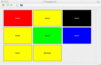 |
Throughline
- Index Cards (Mac) - $19.95
Interactive
index cards - add notes, titles, colors, click and drag to re-arrange.
An essential tool for every writer.
|
|
Movie
Magic Screenwriter - $149.95
The most
advanced screenwriting software available, Movie Magic is deemed a
"preferred file format" by the Writer's Guild. An
industry standard, MMS is used by professionals and studios around the
world.
|
|

|
Final
Draft - $199.95
Like Movie
Magic Screenwriter, Final Draft is an industry standard, used by many
professional screenwriters and studios around the world.
|
 |
Between
The Lines (Macintosh) - $29.95
The lowest
cost automatic screenplay formatter for Macintosh includes high-end
features such as interactive index cards linked to your script.
|
|

|
 |
12
Hour Writing Course - $19.95
Everything
you need to know about story structure - twelve hours of video on a
single DVD - presented by Dramatica Theory co-creator, Melanie Anne
Phillips.
|
 |
Dramatica
Software Companion - $19.95
More than
four hours of video demonstrations of every key feature in Dramatica,
narrated by the co-creator of Dramatica.
|
 |
StoryWeaving
Tips Book - $19.95
170 pages of
eye-opening essays on story structure, storytelling, finding inspiration
and a wide variety of writing techniques.
|
|
StoryWeaving
Seminar 8 DVD Set - $99.95
14 hours of
video from a live two day course taught by theory co-creator Melanie
Anne Phillips covering Dramatica story structure and StoryWeaver
storytelling.
|
|
StoryWeaving
Seminar Online - $49.95
The same 14
hour program presented in streaming video that you can view online or
download for a permanent copy.
|
|
Dramatica
Theory 2 Hour Audio Program - $19.95
Every key
concept in the Dramatica Theory of Story is fully explained in this
double-CD set.
|
|

|
Writing
Characters of the Opposite Sex - $29.95
A three-hour
audio CD set that explains everything you need to know to create
characters of both sexes that ring absolutely true (and maybe even gain
insight into the communication problems in the real world!)
|
 |
Master
Storyteller Improves Your Writing - $29.95
Become a
better writing with this series of interactive exercises.
|
|

|
How
to Create Great Characters DVD - $19.95
A 90 minute
video program recorded during Dramatica co-creator Melanie Anne
Phillips' live in-person seminar on story structure and storytelling.
|
|

|
Structure
vs. Passion - Audio CD $19.95
The Story
Mind approach to writing uses your own passions to create your story's
structure. It focuses your efforts, clarifies the direction of
your story, and triggers your imagination.
|
|

|
Writing
with the Story Mind - Audio CD - $19.95
Learn how to
psychoanalyze your story's "mind" to uncover and treat
problems with characters, plot, theme, and genre.
|
|

|
|
|
Academic
Prices - Discounts on Select Products
Are you a
student, teacher, or academic staffer? Get the very best price on
select products with these manufacturer sponsored academic discounts!
|
|

|
Package
Deals - Starting at $49.95
Get deep
discounts with these bundles of our most popular writing products.
|
|

|
Writer's
Survival Kit Bonus Package - FREE!
Free with
ANY purchase - Writing software, online writing workshops, writing
seminars on video, story theory book, and much, MUCH more!
|
| |
|











 Format:
Windows / Mac CD-ROM
Format:
Windows / Mac CD-ROM
