|
|
Software |
StoryWeaver
$29.95

A step by
step approach to story development, from concept to completed story for
your novel or screenplay. More than 200 interactive Story Cards guide
you through the entire process.
Details
and Demo
Dramatica
$149.95

The most
powerful story structuring software available, Dramatica is driven by a
patented "Story Engine" that cross-references your dramatic
choices to ensure a perfect structure.
Details
and Demo
Movie
Magic Screenwriter
$149.95

The most
advanced screenwriting software available, Movie Magic is deemed a
"preferred file format" by the Writer's Guild. An industry
standard, MMS is used by professionals and studios around the world.
Details
and Demo
Throughline
Index Cards
$9.95
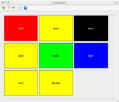
Interactive
index cards - Name them, add notes, titles, colors, click and drag to
re-arrange, adjust font, save, export and print. An essential tool for
every writer.
Details
Academic
Discounts
on Select Products

Are you a
student, teacher, or academic staffer? Get the very best price on select
products with these manufacturer sponsored academic discounts!
Details

|
| |

Abandoned documents from the earliest days
of Dramatica Theory development
developed by
Melanie Anne Phillips and Chris Huntley
The Dramatica
Dynamic Model

Preface
The following document was one of the first attempts to model the Story
Engine which drives the Dramatica software. If the structure is likened to a Rubik's
Cube, then these algorithms describe how the cube can be twisted and turned to create
different patterns - in this case, dramatic patterns.
The Dynamics are driven by questions posed to an author. The
author's answer to each question twists the model in a different manner. Some of the
questions twist the model directly, others twist the relationship between other questions
so that depending upon some answers other questions may have completely different effects
on the structure.
The structure is built from smaller units called quads. Each quad
contains four items. They are arranged so that they represent a fractal relationship
from top to bottom and an iterative relationship as they spiral up from bottom to top.
To visualize the dynamics that drive the model, we must use another kind
of quad called and "Operation Quad" or "Op Quad" for short.
Toward the end of this document is a chart showing the primary Op Quads. Each
position in each quad represents an operation which will be performed on the structure in
response to an author's answer to a particular question.
As indicated above, some operations are applied directly to the
structure's quads, and others are applied to other Op Quads, twisting them and therefore
altering the manner in which the operations are later applied to the structure.
Finally, it should be noted that this early attempt to quantify the
structural dynamics is not completely accurate. Some operations were later refined
to become more symmetrical, thereby providing questions to authors which are more evenly
spaced around a story's structure. In addition, a good deal of terminology was later
changed, and even the interpretation of what certain operations meant to a story was
refined. This can be seen in the names and descriptions of some of the
questions, several of which were completely redefined as the Story Engine evolved.
NOTE: Portions of the following material
are protected under
United
States Patent Number 5,734,916
The Dramatica Dynamic Model
by Melanie
Anne Phillips
co-creator of the Dramatica
Theory & Software
The following information describes the nature,
content and functioning of the Dramatica Dynamic Model and its relationship to and effect
upon the Dramatica Structural Model.
Introduction
The entire Dramatica model consists of two parts: a Structural model
and a Dynamic model.
The Structure represents the relationship of the processes of the
Story Mind (how they affect each other) through the spatial arrangement of semantic terms
within a matrix.
The Dynamics represent the external force or the Environment that
acts upon the Story Mind creating a differential between the Story Mind and the
Environment.
The Dynamics are implemented as operations that re-order the
arrangement of the Structural semantics within the matrix. When the Structural and Dynamic
models are balanced against each other, there is no dramatic potential and there is no
story. When an imbalance (or inequity or difference) exists between the Structure and the
Dynamics, dramatic potentials are present and a story exists. It is the function of the
author to specify the nature and location of the differentials between the two models.
In and of themselves, this differential is a relationship of logic,
but its overall impact on an audience when presented in a linear fashion over the course
of the telling of a story determines the emotional meaning.
We refer to the differential between Structure and Dynamics as a
story’s "Orientation" and the determinate of its specific linear order of
presentation, a story’s "Alignment".
"Orientation" is determined by the author’s
application of a "Bias" to a story, and "Alignment" is controlled by
the author’s use of "Skew".
"Bias" is the process of making four binary choices as
to the Orientation of the Dynamics, and "Skew" is the process of making four
binary choices as to the Alignment of the Dynamics in respect to the Structure.
The Dynamic Model
The Dynamic model has four "levels"
of appreciation of the differential. One level is based on looking at (or using a
particular kind of measuring stick to examine) the differential in terms of Space; one in
terms of Time; one in terms of Objective Reality, on in terms of Subjective Reality.
In the following examples we will present the levels as four
horizontal rows. Each of these four levels has three "measurements" that are
made with that appreciation. One is Objective/Subjective, one is Space/Time, one is
Positive/Negative. These three factors are presented as vertical columns.
In each level, two measurements will be made: One as result of the
author’s Bias choice for that level, the other as a result of the author’s Skew
choice. The relationship between the Bias and the Skew is measured by the third
measurement. As a result, of the twelve positions in the grid of the Dynamic model, four
will be determined by the author’s selection of four binary Bias choices, four will
be determined by the author’s selection of four binary Skew choices, and four will be
automatically determined by the four combinations of Bias and Skew.
Bias Questions:
1. Does the Main Character need to Change or Remain Steadfast?
2. Does the Main Character Succeed or Fail?
3. Is that a Good thing or a Bad thing?
4. Do we view the Main Character with Sympathy or Empathy?
Skew Questions:
1. Is it an Action or Decision story?
2. Is the main Character a "Do-er" or "Be-er"?
3. Does a "Space-lock" or a "Time-lock" limit
the story?
4. Does the main Character need to Stop doing something he is doing
or Start doing something he hasn't been doing?
Bias Question Effects
Steadfast or Change?
Operation:
Stories are driven by "Justification", which might be
defined as the difference between the way the main Character sees things and the way
things really are. When we look at Justification Objectively, we see the Story’s
Bias. When we look at it Subjectively, we see the Main Character's bias. Both Biases swap
semantics into different positions in the Structural model by "flipping" or
"rotating" them within a quad. The Story Justification favors rearranging all
items at a given "resolution" first, THEN moving to lower resolutions,
completing the functions at each before moving to the next. The Main Character
Justification favors rearranging items through all resolutions, THEN, moving through the
allied items at the same level in which it started. In terms of the Structure, Story
Justification favors the horizontal quads, and Main Character Justification favors the
vertical quads.
Effect:
Because there are two kinds of Justification, one will be applied to
the model first, the other second. The result is that the first one applied will work on
the neutral structure directly, the second one applied will work on an already biased
structure. Sometimes the Main Character has to accept things the way they are (Change) or
cause things to get in line with the way he sees them (Steadfast). If the author selects
Steadfast, then the main Character’s Justification will be applied first, making it
the more accurate of the two. If the author selects Change, then the Story’s
Justification will be applied first, making it the more accurate.
Good or Bad?
Operation:
Once the two Justifications have been applied, they need to be
presented to the audience. Unlike the author, the audience does not see the story as an
overall foregone set of dramatics. Rather the audience is presented the dramatics in a
time linear fashion as a story unfolds; slowly building up an understanding of how they
all fit together. This is not unlike the scanning lines of a television building up an
entire picture.
Effect:
The justified structure can be scanned in either of two manners.
One, it could be presented in a depth- first order that favors resolution or in a breadth
-first order that favors in horizontal quads. If the author selects "Good"the
type of scanning will favor the same approach as the first kind of Justification applied
to the model. If the author selects "Bad" the type of scanning will favor a
different approach than the first kind of justification applied to the model. This creates
in the audience all possible combinations of feeling that Main Character’s success or
failure is a good or bad thing in terms of "The Big Picture"
Success or Failure?
Operation:
Success or Failure is determined whether or not the Main Character
achieves his goal, independent of good or bad. In order to achieve his goal, he must end
up where he wants. Because a quad has four positions and can be seen as dynamic or
companion pairs, in order to succeed, the Main Character must start at one point and end
at its appropriate partner. If he does not, he has failed.
Effect:
The quads of the success/failure level are by default arranged in a
success configuration. If the author chooses Success, there will be no effect. If the
author chooses failure, the Dependent pairs of each of the three quads at this level will
flip in reference to each other within each quad. In other words, in each quad, one of the
dynamic pairs will invert from top to bottom in reference to the other, simultaneously
disrupting both dynamic and companion pairs and preventing the main Character from
successfully completing his quest.
Sympathy/Empathy
Operation:
The audience can feel one or two ways about their Main Character;
they can identify with him or simply identify him. In the first case, they see the story
trough his eyes. In the second case, they focus his attention on him. Either way the Main
Character is the center of the story but we either see story from his point of view or
watch him as he experiences the story.
Effect:
The three quads at the bottom level are juxtaposed upon each other
in order to create appreciations of all the quads in the structure as to their
subjectivity, objectivity, time, space, positive and negative natures. When combined as
they are in their default position, the relationships created between subjective and
objective will have the audience looking trough the Main Characters eyes, the author's
choice of "Empathy". If the author chooses "Sympathy" all three quads
flip over like poker chips, and are combined from their reverse sides, reordering subject
and objective, time and space, positive and negative and having the audience look at the
Main Character.
Skew Questions
Action or Decision?
Operation:
The story's justification either represents an external or internal
inequity of the story mind. If the Skew is external, the Justification (and hence the
story) will manifest itself in action. If the Skew is Internal, the story will focus on
decision.
Effect:
The two operations of "flipping" and "rotating"
will be applied to the Structure, one before the other. If the flipping portion of the
Story Justification function is applied first, the Story will favor a spatial (or
external) view and will manifest itself in action. If the rotation portion of the Story
Justification function is applied first, the Story will focus on the temporal and
(internal) view and the story will manifest itself primarily in Decision.
Do-er or Be-er
Operation:
Just as the story's justification can favor Action or Decision, so
can the Main Character's Justification. The Do-er or Be-er choice identifies the main
Character as someone who prefers to attempt to resolve inequities and solve problems by
taking action or making a decision (changing the environment and changing oneself).
Effect
As with the Story Justification, if the Main Character will
"come off" to the audience as a Do-er. Rotate first, flip second will create a
Be-er Main Character.
Space-lock or Time lock?
Operation:
Every story would go on forever unless the Main Character reached a
point where he was forced by circumstance to make a decision to change or remain Steadfast
in "a leap of faith". To reach this point the Main Character must "run out
of room" to delay his decision. The limiting factor can either be spatial or
temporal. In the Space-Lock the Main Character runs out of options. (New things to try to
avoid the leap of faith) In the Time-Lock, the Main Character runs out of time to try new
things.
Effect:
Although flip and rotate may carry all the items below them when
they are applied to the Structure (carrying the children), in a given quad the children
may go only with flip or only with rotate, or with both or neither. In a Space lock, it is
the shape of the flip pattern that determines which of those four scenarios applies. In a
Time-lock, it is the shape of the rotate pattern that determines which of the four
applies.
Start or Stop?
Operation:
A Main Character’s success depends upon his meeting the need or
either adopts a new method to get rid of and old one. For example, is a Main Character
blocked from success because he is mean or because he lacks kindness? Obviously these are
two sides of the same coin, but which we focus on is the issue here.
Effect:
The position of the Main Character’s Justification Class
relative to the Story’s Justification Class determines the Start or Stop nature of
the roadblock to success. If the two classes are companions, the main Character must Start
doing something he hasn’t been doing. If the classes are dependent pairs, the Main
Character must Stop doing something he has been doing.
What needs to be implemented
Questions
The four Bias and four Skew questions must be asked of the author,
and the result of each made available as calls to invoke certain sub-routines.
Operations
The following operations must be available to apply to the
Structure:
Orientations
The following quad arrangement must be created so that the
operations of flip and rotate can be called in a manner as to apply them to the structure
based on the position in the quad:
Justification Sub-routines
Each of the two types of Justification has
very specific rules that delineate the location and order of applying flips and rotates to
the Structural model. These functions will be specified later, as it is a large and
complicated procedure. The important thing at this point is that both of the Justification
Sub-routines will need to be able to access the arrangement of the flip and rotate quads
as well as which one is locked to the children and which ones carry the children. This
information will then allow the sub-routines to apply the proper mix of operations to each
specific quad.
Structural Considerations
Since we are making the calls of flip and rotate; we need to be able
to move the semantics of the structure around in the matrix. Earlier in the Dramatica
development, we accomplished this by calling the original position of the semantics as
their Absolute Address, and the positions they moved to their Relative Address. Each
semantic, then, might carry two addresses with it: the Absolute, which remains constant no
matter where it is, and the Relative, location dependent and changeable. This is
essential, as in order to obtain meaning from the justified model; we need to return all
of the semantics to their original position.
Here is how that works. We have discussed in the past the
concepts of Potential, Resistance, Current, and Power (or Outcome). These are the four
spatial measurements that can be made of any quad. Potential will always be attached to
whatever semantic item is in the upper left corner of the quad, Resistance to the upper
right, Current to the lower left, Power to the lower right. When the model has been fully
justified, the PRCP template is applied to each quad and attached to the semantics in the
quad at that time. Next, the semantics are returned to their Absolute Address, dragging
the PRCP markers with them. Obviously, in many cases, the PRCP will be all out of order in
the Absolute Address arrangement. This is the nature of finding meaning in the justified
model: to see how this PRCP has shifted as a result of a specific justification. This
shift is what we see in the dynamics we have already programmed. Similarly, the 1,2,3,4
act-order template is also applied to the Justified model at the same time as the PRCP,
and this is why Act order in the Structure is determined by the Justification of the
applied dynamics.
In Summary
1. We must obtain the four Bias and four Skew
answers from the Author.
2. We must use those answers to orient the internal make-up of
certain quads, and the relationship between others.
3. We must be able to access the position of items in each of these
quads.
4. We must be able to lay quads of dynamics "on top" of
each other to determine how various orientations combine.
5. We need a system of Absolute and Relative addressing for the
semantics of the Structural model and a means of attaching a template to them that can be
carried back to the Absolute address position.
Visit
the Dramatica Theory Home Page
Try Dramatica & StoryWeaver Risk
Free*

$179.95
$29.95
*Try either or both for 90 days. Not working for you?
Return for a full refund of your purchase price!
About Dramatica and
StoryWeaver
Hi, I'm Melanie Anne Phillips,
creator of StoryWeaver,
co-creator of Dramatica
and owner of Storymind.com. If you have a moment, I'd like to tell you
about these two story development tools - what each is designed to do, how
each works alone on a different part of story development and how they can be
used together to cover the entire process from concept to completion of your
novel or screenplay.
What They Do
Dramatica is a tool to help you
build a perfect story structure. StoryWeaver is a tool to help you build
your story's world. Dramatica focuses on the underlying logic of your
story, making sure there are no holes or inconsistencies. StoryWeaver
focuses on the creative process, boosting your inspiration and guiding it to add
depth, detail and passion to your story.
How They Do It
Dramatica has the world's only
patented interactive Story Engine™ which cross-references your answers to
questions about your dramatic intent, then finds any weaknesses in your
structure and even suggests the best ways to strengthen them.
StoryWeaver uses a revolutionary new
creative format as you follow more than 200 Story Cards™ step by step through
the story development process. You'll design the people who'll inhabit
your story's world, what happens to them, and what it all means.
How They Work
Together
By itself Dramatic appeals to
structural writers who like to work out all the details of their stories
logically before they write a word. By itself, StoryWeaver appeals to
intuitive writers who like to follow their Muse and develop their stories as
they go.
But, the finished work of a
structural writer can often lack passion, which is where StoryWeaver can help.
And the finished work of an intuitive writer can often lack direction, which is
where Dramatica can help.
So, while each kind of writer will
find one program or the other the most initially appealing, both kinds of
writers can benefit from both programs.
Try Both Programs
Risk Free!
We have a 90
Day Return Policy here at Storymind. Try either or both of these
products and if you aren't completely satisfied we'll cheerfully refund your
purchase price.
Our
Complete Catalog of Products
|

Get
the Writer's Survival Kit Bonus Package
FREE with ANY purchase!
A $300 Value!
|
|
StoryWeaver
- $29.95
Our
Bestseller! A
step by step approach to story development, from concept to completed
story for your novel or screenplay. More than 200 interactive
Story Cards guide you through the entire process.
|
|
Dramatica
Pro - $179.95
Includes
2 Exclusive Bonuses! The
most powerful story structuring software available, Dramatica is driven
by a patented "Story Engine" that cross-references your
dramatic choices to ensure a perfect structure.
|
 |
Dramatica
Writer's DreamKit - $49.95
Little
brother to Dramatica Pro, Writer's DreamKit is built around the same
patented Story Engine - it just tracks fewer story points. So, you
develop the same solid story structure, just with fewer details.
Perfect for beginning writers or those new to Dramatica.
|
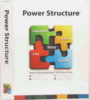 |
Power
Structure - $149.95
An
all-in-one writing environment with built-in word processor that helps
you organize and cross-reference your story development materials.
INCLUDES DVD SET BONUS!
|
|

|
Power
Writer - $99.95
The little
brother of Power Structure includes the essential organization and word
processing tools writers need the most.
|
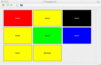 |
Throughline
- Index Cards (Mac) - $19.95
Interactive
index cards - add notes, titles, colors, click and drag to re-arrange.
An essential tool for every writer.
|
|
Movie
Magic Screenwriter - $149.95
The most
advanced screenwriting software available, Movie Magic is deemed a
"preferred file format" by the Writer's Guild. An
industry standard, MMS is used by professionals and studios around the
world.
|
|

|
Final
Draft - $199.95
Like Movie
Magic Screenwriter, Final Draft is an industry standard, used by many
professional screenwriters and studios around the world.
|
 |
Between
The Lines (Macintosh) - $29.95
The lowest
cost automatic screenplay formatter for Macintosh includes high-end
features such as interactive index cards linked to your script.
|
|

|
 |
12
Hour Writing Course - $19.95
Everything
you need to know about story structure - twelve hours of video on a
single DVD - presented by Dramatica Theory co-creator, Melanie Anne
Phillips.
|
 |
Dramatica
Software Companion - $19.95
More than
four hours of video demonstrations of every key feature in Dramatica,
narrated by the co-creator of Dramatica.
|
 |
StoryWeaving
Tips Book - $19.95
170 pages of
eye-opening essays on story structure, storytelling, finding inspiration
and a wide variety of writing techniques.
|
|
StoryWeaving
Seminar 8 DVD Set - $99.95
14 hours of
video from a live two day course taught by theory co-creator Melanie
Anne Phillips covering Dramatica story structure and StoryWeaver
storytelling.
|
|
StoryWeaving
Seminar Online - $49.95
The same 14
hour program presented in streaming video that you can view online or
download for a permanent copy.
|
|
Dramatica
Theory 2 Hour Audio Program - $19.95
Every key
concept in the Dramatica Theory of Story is fully explained in this
double-CD set.
|
|

|
Writing
Characters of the Opposite Sex - $29.95
A three-hour
audio CD set that explains everything you need to know to create
characters of both sexes that ring absolutely true (and maybe even gain
insight into the communication problems in the real world!)
|
 |
Master
Storyteller Improves Your Writing - $29.95
Become a
better writing with this series of interactive exercises.
|
|

|
How
to Create Great Characters DVD - $19.95
A 90 minute
video program recorded during Dramatica co-creator Melanie Anne
Phillips' live in-person seminar on story structure and storytelling.
|
|

|
Structure
vs. Passion - Audio CD $19.95
The Story
Mind approach to writing uses your own passions to create your story's
structure. It focuses your efforts, clarifies the direction of
your story, and triggers your imagination.
|
|

|
Writing
with the Story Mind - Audio CD - $19.95
Learn how to
psychoanalyze your story's "mind" to uncover and treat
problems with characters, plot, theme, and genre.
|
|

|
|
|
Academic
Prices - Discounts on Select Products
Are you a
student, teacher, or academic staffer? Get the very best price on
select products with these manufacturer sponsored academic discounts!
|
|

|
Package
Deals - Starting at $49.95
Get deep
discounts with these bundles of our most popular writing products.
|
|

|
Writer's
Survival Kit Bonus Package - FREE!
Free with
ANY purchase - Writing software, online writing workshops, writing
seminars on video, story theory book, and much, MUCH more!
|
| |
|














 Format:
Windows / Mac CD-ROM
Format:
Windows / Mac CD-ROM
