|
For Story Structure |
|
For Story Development |
|
|
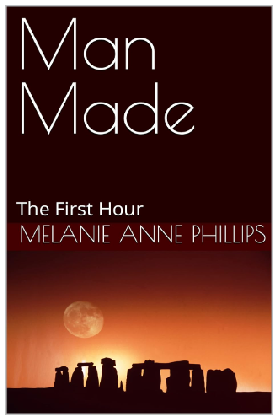
Read the Science Fiction Thriller
From the founder of Storymind
Man Made follows a mysterious force as it sweeps around the globe erasing anything man made -
Governments stagger under the panic, religions are at a loss for an explanation, scientists strive for any means to stop or divert the phenomenon, and the world’s population from families to individuals struggle to prepare for The Event, which will drive humanity back beyond the stone age.
The Event is coming.
Are you prepared?
Copyright Melanie Anne Phillips
|
|
Free Writing Resources

Free Online Book on Narrative Structure
(You can also buy a copy)
Developed and Written by
Melanie Anne Phillips & Chris Huntley
Chapter 37
Storytelling:
Reception & Propaganda
A Quick Lesson in Propaganda
Propaganda, n. 1. any organization or movement working for the propagation of particular ideas, doctrines, practices, etc. 2. the ideas, doctrines, practices, etc. spread in this way. (Webster's New Twentieth Century Dictionary)
Propaganda: 3. a storyforming/storytelling technique used to impact an audience in specific ways, often employed to instigate deliberation and/or action. (Dramatica)
Propaganda is a wondrous and dangerous story device. Its primary usage in stories is as a method for an author to impact an audience long after they have experienced the story itself. Through the use of propaganda, an author can inspire an audience to think certain ways, think about certain things, behave certain ways, and take specific actions. Like fire and firearms, propaganda can be used constructively and destructively and does not contain an inherent morality. Any morality involved comes from the minds of the author and his audience.
This section is not about the morality of propaganda. It is designed as a primer on how to create and employ propaganda in stories. With that in mind, let's get down to the nitty-
The Basics of Propaganda
The human mind seeks to understand itself and the world around it. It does this through various ways including organizing information into meaningful patterns. Depending on the quantity of the information and the accuracy of its interpretation, a mind will identify a pattern (or several potential patterns) and supply the apparently "missing" pieces to make the pattern, and therefore meaning, complete. This pattern matching and filling in of missing pieces is intrinsic to the processes that create the human "mind." By choosing which piece(s) of the storyform to omit, authors can manipulate the impact a story will have on the minds of their audiences.
In its most basic form, propaganda is a way for authors to have an audience share their point of view. Closed (or complete) stories allow authors to present their points of view in the form of an argument which the audience can then take or leave. Open (or incomplete) stories require their audiences to supply the missing pieces in order to get meaning from the story. Just creating an open story, however, does not create propaganda. There must be a pattern to what is missing.
The amount and nature of the missing pieces have a tremendous effect on the story's propagandistic impact. If you leave too much out of your story, an audience may not make the effort to "fill-
Since a propaganda story is based upon a tenuous relationship between an audience and an author, both perspectives should be considered to understand the techniques that can be used and the results that can be achieved.
The Audience
Knowing (or preparing) your audience can have a tremendous effect on how your propaganda will impact them. Here are some rules of thumb:
The more specific the symbols you use to encode your story, the more limited an audience it will affect. The less specific the symbols, the greater potential audience.
The more specific the symbols used to encode the story, the greater the likelihood it will have an impact on the portion of the audience that understands the symbols. The less specific the symbols, the less impact the story will have.
The more familiar an audience is with the symbols used to encode a story, the more susceptible they are to propaganda. The less familiar, the less susceptible.
The Author
Here are the things an author should consider while creating a propaganda story:
1. Nature of Impact
How you want to impact your audience? Do you wish to play with your audience's:
Motivations (what drives them)
Methodologies (how they go about doing things)
Purposes (what they are striving for)
Means of evaluation (how they measure their progress -
Pick only one as the area of primary impact. This will become the area of the storyform that you purposefully omit when storytelling. The remaining three areas will be used to support your intent by drawing attention away from the missing piece(s).
2. Area of Impact
What part of your audience's world-
View of the world around them -
View of relationships (Subjective Story)
View of themselves (Main Character)
View of others (Obstacle Character)
Choose one of the perspectives. This will be the domain in which to place the "hole" in the storyform. The area of impact determines which part of your audience's world-
3. Type of Impact: Specific vs. General
Do you want the impact on your audience to be of a specific nature, or of a broader, more general nature?
The more specific you make the propaganda, the more specific and predictable its impact will be on an audience. The upside (from an author's point of view) is that specific behavior (mental or physical) can be promoted or modified. The downside is that specific propaganda is more easily identifiable and therefore contestable by the audience.
Specific propaganda is achieved by intentionally not encoding selected story appreciations, such as the Main Character's motivation or the story Outcome (Success or Failure). The audience will supply the missing piece from its own personal experiences (e.g. the Main Character's motivation in Thelma and Louise.; what happened to Louise in Texas that prevents her from ever going back is specifically not mentioned in the film -
The more general you make the propaganda, the less specific but all-
General propaganda is achieved by intentionally not encoding entire areas of the story's structure or dynamics. For example, by leaving out almost all forms of the story's internal means of evaluation, Natural Born Killers forces its audience to focus on the methodologies involved and question its own (the members of the audience) means of evaluation.
4. Degree of Impact
To what degree do you wish to impact your audience? The degree to which you can impact an audience is dependent on many variables not the least of which are your storytelling skills and the nature of the audience itself. There are some basic guidelines, however, that can mitigate and sometimes supersede those variables when skillfully employed.
Shock as Propaganda
One tried-
Psycho broke the storyform to impact the audience's preconscious by killing the main character twenty minutes or so into the film (the "real" story about the Bates family then takes over). The shock value was enhanced through marketing by having the main character played by big box office draw Janet Leigh (a good storytelling choice at the time) and the marketing gimmick that no one would be allowed into the movie after the first five or ten minutes. This "gimmick" was actually essential for the propaganda to be effective. It takes time for an audience to identify on a personal level with a main character. Coming in late to the film would not allow enough time for the audience member to identify with Janet Leigh's character and her death would have little to no impact.
The Crying Game used a slightly different process to achieve a similar impact. The first twenty minutes or so of the film are used to establish a bias to the main character's (and audience's) view of reality. The "girlfriend" is clearly established except for one important fact. That "fact," because it is not explicitly denoted, is supplied by the mind of the main character (and the minds of the audience members). By taking such a long time to prep the audience, it comes as a shock when we (both main character and audience) find out that she is a he.
Awareness as Propaganda
Another method is to be up-
A filmic example of this technique can be seen in JFK. By choosing a controversial topic (the assassination of President Kennedy) and making an overly specific argument as to what parties were involved in the conspiracy to execute and cover-
Conditioning as Propaganda
Presenting an audience with an alternative life experience is yet another way to impact your audience. By ignoring (or catering to) an audience's cultural bias, you can present your story as an alternative reality. This impacts an audience by undermining or reinforcing their own personal Memories. By experiencing the story, the message/meaning of the story becomes part of the audience's memory base.
The nature of the propaganda, however, is that the story lacks context, which must be supplied by the audience. Thus personalized, the story memory is automatically triggered when an experience in the audience's real life summons similarly stored memories. Through repeated use, an audience's "sensibilities" become conditioned.
In Conditioning propaganda, audience attention is directed to causal relationships like When A also B (spatial), and If C then D (temporal). The mechanism of this propaganda is to leave out a part of the causal relationships in the story, such as When A also B and If ?? then D. By leaving out one part, the objective contextual meaning is then supplied automatically by the audience. The audience will replace ?? with something from its own experience base, not consciously considering that a piece is missing because it will have emotionally arrived at the contradiction: When A also B and then D.
This type of propaganda is closest to the traditional usage of the term with respect to stories, entertainment, and advertising. For example, look at much of the tobacco and alcohol print advertising. Frequently the Main Character (the type of person to whom the advertisement is supposed to appeal) is attractive, has someone attractive with them, and appears to be well situated in life. The inference is that when you smoke or drink, you are also cool, and if you are cool then you will be rich and attractive. The connection between "cool" and "rich and attractive" is not really in the advertisement but an audience often makes that connection for itself. In Conditioning propaganda, more than in the other three forms of propaganda, the degree of impact on your audience is extremely dependent on your audience's life experience outside the story experience .
Crimes and Misdemeanors is a film example that employs this conditioning technique of propaganda. The unusual aspect of the film is that it has two completely separate stories in it. The "Crimes" story involves a self-
The propaganda comes into effect when the audience experiences in its own life a Failure/Bad scenario that triggers a recollection of the Success/Good story about forgetting the grief of having murdered -
Misdirection as Propaganda
The most subtle and possibly most effective form of propaganda from a single exposure is the use of misdirection as a way to impact an audience's Subconscious. Like "smoke and mirrors" used by magicians, this form of propaganda requires focusing the audience's Conscious attention in one place while the real impact is made in the Subconscious. Fortunately for propagandistic minded authors, this is one of the easiest forms of propaganda to create.
This technique comes from omitting parts of the storyform from your storytelling. What you leave out becomes the audience's blind spot, and the dynamic partner to the omitted storyform piece becomes the audience's focus. The focus is where your audience's attention will be drawn (the smoke and mirrors). The blind spot is where your audience personalizes the story by "filling-
Let's look at some dynamic pairs of partners that appear in a storyform. The following pairs concern the nature of the impact on your audience:
Motivation <> Purpose
Means of Evaluation <> Methodology
Should you wish to impact your audience's motivations, omit a particular motivation in the story . The audience, then, focused on the purpose they can see will automatically supply a motivation that seems viable to them (e.g.: Thelma and Louise ).
Here are the storyform dynamic pairs that relate to story/audience perspectives:
Objective Perspective <> Subjective Perspective
Main Character Perspective <> Obstacle Character Perspective
Combining a nature with a perspective gives an author greater control over a story's propaganda. For example, if you wish to impact your audience in how they view the means of evaluation employed by the world around them, omit the Objective Story means of evaluation elements and the audience's attention will be distracted by focusing on the methodologies employed (e.g.: Natural Born Killers).
A Word Of Warning
Propaganda is powerful but using it involves risks. It is like a virus or engaging in germ warfare. Once an audience is exposed to a propagandistic message, the only way they can neutralize it is to balance it with an equal but opposite force. Audiences frequently don't like to think they are being manipulated. If the audience becomes aware of the nature of your propaganda, the equal but opposite force can take the form of a backlash against the author(s) and the propaganda itself. Look at the strong reaction against advertisers who "target" their advertising to specific demographic groups (e.g. African Americans, women, Generation X, etc.), particularly if they are trying to sell liquor, tobacco products, or other items considered "vices" in America.
Once released, propaganda is difficult to control and frequently becomes subject to real world influences. Sometimes propaganda can benefit from real world coincidences: The China Syndrome's mild propaganda about the dangers of nuclear power plants got a big boost in affecting its audience because of the Three Mile Island incident; the media coverage of the O.J. Simpson murder case may not have tainted potential jurors, but Natural Born Killers' propaganda against the media's sensationalizing of violence got a little extra juice added to its punch. Often real life or the passage of time can undermine the effectiveness of propaganda: it is possible that Reefer Madness may have been effective when it first came out, but audiences today find its propaganda against drug use obvious, simplistic, risible and, more importantly, ineffective.