|
For Story Structure |
|
For Story Development |
|
|
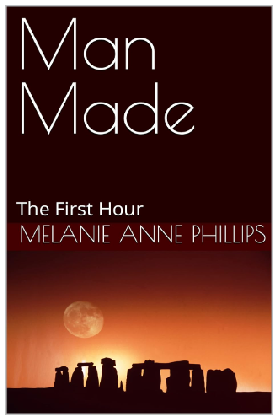
Read the Science Fiction Thriller
From the founder of Storymind
Man Made follows a mysterious force as it sweeps around the globe erasing anything man made -
Governments stagger under the panic, religions are at a loss for an explanation, scientists strive for any means to stop or divert the phenomenon, and the world’s population from families to individuals struggle to prepare for The Event, which will drive humanity back beyond the stone age.
The Event is coming.
Are you prepared?
Copyright Melanie Anne Phillips
|
|
Free Writing Resources
The Archetypal Characters:
Protagonist and Antagonist
Protagonist drives the plot forward.
Antagonist tries to stop him.
In the Story Mind, the Protagonist is the Prime Mover of the effort to achieve the Story's Goal. The Antagonist is the Chief Obstacle to that effort. In a sense, Protagonist is the irresistible force and Antagonist is the immovable object.
In our own minds, we survey our environment and consider whether or not we could improve things by taking action to change them. The struggle between the Protagonist and Antagonist represents this inner argument: is it better to leave things the way they are or to try and rearrange them?
The Protagonist represents our Initiative, the motivation to change the status quo. The Antagonist embodies our Reticence to change the status quo. These are perhaps our two most obvious human traits -
Functionally, the character you choose as your Protagonist will exhibit unswerving drive. No matter what the obstacles, no matter what the price, the Protagonist will charge forward and try to convince everyone else to follow.
Without a Protagonist, your story would have no directed drive. It would likely meander through a series of events without any sense of compelling inevitability. When the climax arrives, it would likely be weak, not seen as the culmination and moment of truth so much as simply the end.
This is not to say that the Protagonist won't be misled or even temporarily convinced to stop trying, but like a smoldering fire the Protagonist is a self-
In choosing which of your characters to assign the role of Protagonist, do not feel obligated to choose one whose Storytelling qualities make it the most forceful. The Protagonist does not have to be the most powerful personality. Rather, it will simply be the character who keeps pressing forward, even if in a gentle manner until all the obstacles to success are either overcome or slowly eroded.
When creating your own stories, sometimes you will know what your goal is right off the bat. In such cases, the choice of Protagonist is usually an easy one. You simply pick the character whose storytelling interests and nature is best suited to the objective.
Other times, you may begin with only a setting and your characters, having no idea what the goal will turn out to be. By trying out the role of Protagonist on each of our characters, you can determine what kind of a goal the nature of that character might suggest.
By working out an appropriate goal for each character as if it were the Protagonist, you'll have a choice of goals. Developing the plot of your story then becomes a matter of choosing among options rather than an exercise in the brute force of creating something from nothing.
What, now, of the Antagonist? We have all heard the idioms, Let sleeping dogs lie, Leave well enough alone, and If it works -
To be clear, Reticence does not mean that the Antagonist is afraid of change. While that may be true, it may instead be that the Antagonist is simply comfortable with the way things are or may even be ecstatic about them. Or, he or she may not care about the way things are but hate the way they would become if the goal were achieved.
Functionally, the character you choose as your Antagonist will try anything and everything to prevent the goal from being achieved. No matter what the cost, any price would not seem as bad to this character as the conditions he or she would endure if the goal comes to be. The Antagonist will never cease in its efforts, and will marshal every resource (human and material) to see that the Protagonist fails in his efforts.
Without an Antagonist, your story would have no concerted force directed against the Protagonist. Obstacles would seem arbitrary and inconsequential. When the climax arrives, it would likely seem insignificant, full of sound and fury, signifying nothing.
In choosing one of your characters as the Antagonist, don't be trapped into only selecting a mean-
The important thing is that the Antagonist must be in a position in the plot to place obstacles in the path of the Protagonist. Since the drive of the Protagonist is measured by the size of the obstacles he or she must overcome, it is usually a good idea to pick the character who can bring to bear the greatest obstacles.
Ask yourself which of your characters would have the most to lose or be the most distressed if the goal is achieved. That will likely be your Antagonist. But don't discount the other candidates out of hand. In storytelling, characters are not always what they seem. Even the character who seems most aligned with the Protagonist's purpose may have a hidden agenda that makes them the perfect choice for Antagonist. You might play such a character as an apparent aid to the effort, and later reveal how that character was actually behind all the troubles encountered.