|
For Story Structure |
|
For Story Development |
|
|
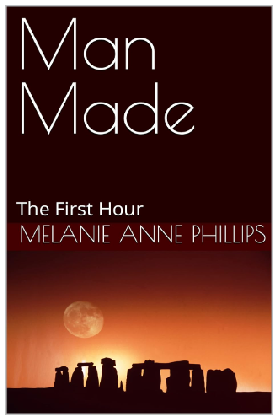
Read the Science Fiction Thriller
From the founder of Storymind
Man Made follows a mysterious force as it sweeps around the globe erasing anything man made -
Governments stagger under the panic, religions are at a loss for an explanation, scientists strive for any means to stop or divert the phenomenon, and the world’s population from families to individuals struggle to prepare for The Event, which will drive humanity back beyond the stone age.
The Event is coming.
Are you prepared?
Copyright Melanie Anne Phillips
|
|
Free Writing Resources
Characters: The Attributes of Age
Introduction
Writers tend to create characters that are more or less the same age as themselves. On the one hand, this follows the old adage that one should write about what one knows. But in real life, we encounter people of all ages in most situations. Of course, we often see stories that pay homage to the necessary younger or older person, but we just as often find gaps of age groups in which there are no characters at all, rather than a smooth spectrum of ages.
In addition, there are many considerations to age other than the superficial appearance, manner of dress, and stereotypical expectations. In this lesson we’re going to uncover a variety of traits that bear on an accurate portrayal of age, and even offer the opportunity to explore seldom-
The Attributes of Age
People in general, and writers in particular, tend to stereotype the attributes of age more than just about any other character trait. There are, of course, the physical aspects of age, ranging from size, smoothness of skin, strength, mobility to the various ailments associated with our progress through life. Then there are the mental and emotional qualities that we expect to find at various points in life. But the process of aging involves some far more subtle components to our journey through life.
Anatomical vs. Chronological age
Before examining any specific traits, it is important to note the difference between anatomical and chronological age. Anatomical age is the condition of your body whereas chronological age is the actual number of years you’ve been around. For example, if you are thirty years old, but all worn out and genetically biased to age prematurely, you might look more akin to what people would expect of a fifty year old. Nonetheless, you wouldn’t have the same interests in music or direct knowledge of the popular culture as someone who was actually fifty years old. When describing a character, you might choose to play off your reader expectations by letting them assume the physical condition, based on your description of age. Or, you might wish to create some additional interest in your character by describing it as “A middle-
Jargon
Far too often, characters are portrayed as speaking in the same generic conversational language we hear on television. The only variance to that is the overlay of ethic buzzwords to our standard sanitized TV through template. In other words, characters act as if they all through alike, even if they had completely different cultural upbringings. But aging is an ongoing evolution of culture, rooting the individual into thought patterns of his or her formative hears, and tempered (to some degree) by the ongoing cultural indoctrination of a social lifestyle.
Characters, therefore, tend to pick up a basic vocabulary reflective of both their ethnicity AND their age. For example, a black man who fought for civil rights along side Dr. Martin Luther King, would not be using the same jargon ad a black man advancing the cause of rights today. And neither of these would use the same vocabulary as a young black man in the center city, trying to find his way out through education. To simply overlay the “black jargon” template on such characters is the same kind of unconscious subtle prejudice promoted by “flesh colored” crayons.
Sure, we all learn to drop some of the more dated terms and expletives of our youth in order to appear “hip” or “with it,” but in the end we either sound silly trying to use the new ones, or avoid them altogether, leaving us bland and un-
Outlook
Speaking of character minds, we all have a culturally created filter that focuses our attention on some things, and blinds us to (or diminishes) others. Sometimes, this is built into the language itself. When it is hot, the Spanish say, “hace calor” (it makes heat). This phrasing is due to the underlying beliefs of the people who developed that language that see every object, even those that are inanimate, as possessing a spirit. So, when it is hot, this is not a mindless state of affairs due to meteorological conditions, but rather to the intent of the spirit of the weather. Of course, if you were to ask a modern Spanish speaking person if they believed in such a thing, you would likely receive a negative reply. And yet, because this concept permeates the language (making everyday items masculine or feminine), it cannot help but alter the way native speakers of the language will frame their thoughts.
As another example, the Japanese population of world war two was indoctrinated in the culture of honor, duty, and putting the needs of society above those of the individual. Although most countries foster this view, in war-
Corporate Japan was built around these Samurai ideals, and workers commonly perceived themselves as existing to serve their companies with loyalty and unquestioning obedience. But when the economy faltered, those who expected to remain with their companies for life were laid off, or even permanently fired. This led to a disillusionment of the “group first” mentality, especially among the young, who had not yet become settled in their beliefs. So, today, there is still a gap between the old-
Continuing with the notion of generation gaps, I grew up when the rallying cry was “Don’t trust anyone over 30.” Of course, now we’re all in our fifties or even sixties, so we are forced to admit that we, ourselves, have in fact become “the Establishment.”
But that is what is visible and obvious to us. The real difference between my generation and the post Yuppie, post GenX, GenY, Gen? Generation is far more foundational. In conversations with my daughter I discovered that while I see myself on the other side of the generation gap, she does not perceive one at all! This is due to primarily to the plethora of high-
To my daughter’s generation, it is only important whether or not you have something worth saying. How old you are has nothing to do with your importance or relevance. In short, the difference between my generation and the younger generation is that we perceive a difference between the generations and they don’t!
In summary then, the age in which you establish your worldview will determine how you perceive current events for the rest of your life. When creating characters of any particular age, you would do well to consider the cultural landscape that was prevalent when each character was indoctrinated.
Comfort Symbols
We all share the same human emotional needs. And we each experience moments that fulfill those needs. Those experiences become fond memories, and many of the trappings of those experiences become comfort symbols. In later life, we seek out those symbols to trigger the re-
Once we have locked into symbols that we can use to trigger emotional experiences, we seldom need to replace them. They are our comfort symbols upon which we can always rely. This has two effects as we age: One, we latch on to performers and music, as an example, that age along with us. We recall them at their prime when we first encountered them, and also have spent years aging along with them. This leads us to suddenly wake up one day and realize we no longer know who they are referring to in popular culture magazines and entertainment reporting televisions shows. In other words, the popular culture has passed us by. Two, we see many of our symbols (favorite advertising campaigns, a restaurant where we went on our first date, etc.) vanish as they are replaced with new and current concerns. So, the world around us seems less relevant, less familiar, and less comfortable, just as we seem to the world at large.
When creating characters, take into account the potential ongoing and growing sense of loss, sadness, and connection between characters and their environment. And don’t think this is a problem only for the elderly. My 24-
Physical Attributes
Babies have a soft spot on their heads that doesn’t harden up for quite a while after birth. Cartilage wears out. Teens in puberty have raging hormones. Young kids grow so fast that they don’t have a chance to get used to the size and strength of their bodies before they have changed again, not unlike trying to drive a new and different car every day. I can’t remember the last time I ran full-
When creating characters, give some thought to the physical attributes and detriments of any given age, and consider how they not only affect the abilities and mannerisms of your characters, but their mental and emotional baselines as well.
Conclusion?
Sure, we could go on and on exploring specifics of age and aging, but since it is a pandemic human condition, it touches virtually every human experience and endeavor. The point here is not to completely cover the subject, but to encourage you to consider it when creating each of your characters. It isn’t enough to simply describe a character as “a middle-