|
|
Software |
StoryWeaver
$29.95

A step by
step approach to story development, from concept to completed story for
your novel or screenplay. More than 200 interactive Story Cards guide
you through the entire process.
Details
and Demo
Dramatica
$149.95

The most
powerful story structuring software available, Dramatica is driven by a
patented "Story Engine" that cross-references your dramatic
choices to ensure a perfect structure.
Details
and Demo
Movie
Magic Screenwriter
$149.95

The most
advanced screenwriting software available, Movie Magic is deemed a
"preferred file format" by the Writer's Guild. An industry
standard, MMS is used by professionals and studios around the world.
Details
and Demo
Throughline
Index Cards
$9.95

Interactive
index cards - Name them, add notes, titles, colors, click and drag to
re-arrange, adjust font, save, export and print. An essential tool for
every writer.
Details
Academic
Discounts
on Select Products

Are you a
student, teacher, or academic staffer? Get the very best price on select
products with these manufacturer sponsored academic discounts!
Details

|
| |
Instant Dramatica
Musings from Armando Saldaña
Mora
The Objective Throughline
is a Battlefield
In a post called "Objective throughline" Kay asked:
"...I'm struggling to write a novel with the objective domain of mind. Do all
the objective character's have to agree with the fixed attitude...?"
No, not at all. But all of them must be involved and have a point of view towards that
fixed attitude.
You asked about the story of the crippled boy and the town that rejected him. The fixed
attitude here was a reaction of disgust that was unavoidable for the town people, and that
reaction troubled the boy and kept him locked inside his house. If that idea were to be
developed, it would need some town people characters that struggle to stop that reaction,
some that were in favor ("that boy is a product of evil!") and some that were
troubled thinking which side to take.
If you're working with archetypal characters -- or doing the very recommended technique
of developing a character as an archetype and then "swapping elements" in order
to make her a complex character -- here are the basic views about the central issue of the
objective throughline:
- Protagonist: Is in favor or against that issue (or maybe isn't completely sure about his
position) but he's leading all the actions for -- or against -- the issue.
- Antagonist: Is diametrically opposed to the Protagonist (If the protagonist is in favor,
he's against and viceversa) and he does anything in his power to stop all the actions the
protagonist's leading.
- Guardian: She tries to shed the light of conscience and show the "true way"
about that issue.
- Contagonist: He's tempting everyone out of his paths. And bringing other issues -or
additional information about the same issue- just to confuse.
- Sidekick: She supports one side completely. Be it the protagonist's or the antagonist's.
- Skeptic: He doubts both sides. He's his own man.
- Emotion: Basically has no reasons for or against the issue, but strong emotional
conflict for or against it.
- Reason: Analyses the issue in a dispassionate way. Takes a side as long as it's
rational.
So, briefly, using your example of "The end justifies the means" in a story
of, say, a nuclear power plant (the cheap energy justifies the nuclear waste) in which the
protagonist is against that power plant:
- The Protagonist tries to make everyone conscious of the dangers of the plant (the
means).
- The Antagonist tries to stop the protagonist campaign so the town keeps agreeing about
the cheap energy (end) issue.
- The Guardian agrees with the protagonist, since she has conscience about the dangers,
but tries to make the protagonist seek better ways of making the people conscious.
- The Contagonist tries to seduce the protagonist out of her quest (offers her a good
public relations job at the plant), so he goes along with the "means justifies
ends" issue.
- The Sidekick supports the (let's say) Antagonist, (he's some kind of super loyal plant
employee), he also goes along.
- The Skeptic doesn't think the plant (means) is good, but doesn't want a raise on the
electric bill either (end). He's against all.
- Emotion supports the protagonist in this case (she's some kind of emotional hippie
protester) but makes trouble at all protests.
- Reason is a scientist researching about sun energy. The protagonist tries to support her
efforts.
So, as you can see, you can play with your characters for or against the issue as much
as you want. But, in order to have conflict, you must have at least one character
disagreeing with the others.
Visit
the Dramatica Theory Home Page
Try Dramatica & StoryWeaver Risk
Free*

$179.95
$29.95
*Try either or both for 90 days. Not working for you?
Return for a full refund of your purchase price!
About Dramatica and
StoryWeaver
Hi, I'm Melanie Anne Phillips,
creator of StoryWeaver,
co-creator of Dramatica
and owner of Storymind.com. If you have a moment, I'd like to tell you
about these two story development tools - what each is designed to do, how
each works alone on a different part of story development and how they can be
used together to cover the entire process from concept to completion of your
novel or screenplay.
What They Do
Dramatica is a tool to help you
build a perfect story structure. StoryWeaver is a tool to help you build
your story's world. Dramatica focuses on the underlying logic of your
story, making sure there are no holes or inconsistencies. StoryWeaver
focuses on the creative process, boosting your inspiration and guiding it to add
depth, detail and passion to your story.
How They Do It
Dramatica has the world's only
patented interactive Story Engine™ which cross-references your answers to
questions about your dramatic intent, then finds any weaknesses in your
structure and even suggests the best ways to strengthen them.
StoryWeaver uses a revolutionary new
creative format as you follow more than 200 Story Cards™ step by step through
the story development process. You'll design the people who'll inhabit
your story's world, what happens to them, and what it all means.
How They Work
Together
By itself Dramatic appeals to
structural writers who like to work out all the details of their stories
logically before they write a word. By itself, StoryWeaver appeals to
intuitive writers who like to follow their Muse and develop their stories as
they go.
But, the finished work of a
structural writer can often lack passion, which is where StoryWeaver can help.
And the finished work of an intuitive writer can often lack direction, which is
where Dramatica can help.
So, while each kind of writer will
find one program or the other the most initially appealing, both kinds of
writers can benefit from both programs.
Try Both Programs
Risk Free!
We have a 90
Day Return Policy here at Storymind. Try either or both of these
products and if you aren't completely satisfied we'll cheerfully refund your
purchase price.
Our
Complete Catalog of Products
|

Get
the Writer's Survival Kit Bonus Package
FREE with ANY purchase!
A $300 Value!
|
|
StoryWeaver
- $29.95
Our
Bestseller! A
step by step approach to story development, from concept to completed
story for your novel or screenplay. More than 200 interactive
Story Cards guide you through the entire process.
|
|
Dramatica
Pro - $179.95
Includes
2 Exclusive Bonuses! The
most powerful story structuring software available, Dramatica is driven
by a patented "Story Engine" that cross-references your
dramatic choices to ensure a perfect structure.
|
 |
Dramatica
Writer's DreamKit - $49.95
Little
brother to Dramatica Pro, Writer's DreamKit is built around the same
patented Story Engine - it just tracks fewer story points. So, you
develop the same solid story structure, just with fewer details.
Perfect for beginning writers or those new to Dramatica.
|
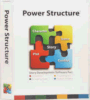 |
Power
Structure - $149.95
An
all-in-one writing environment with built-in word processor that helps
you organize and cross-reference your story development materials.
INCLUDES DVD SET BONUS!
|
|

|
Power
Writer - $99.95
The little
brother of Power Structure includes the essential organization and word
processing tools writers need the most.
|
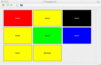 |
Throughline
- Index Cards (Mac) - $19.95
Interactive
index cards - add notes, titles, colors, click and drag to re-arrange.
An essential tool for every writer.
|
|
Movie
Magic Screenwriter - $149.95
The most
advanced screenwriting software available, Movie Magic is deemed a
"preferred file format" by the Writer's Guild. An
industry standard, MMS is used by professionals and studios around the
world.
|
|

|
Final
Draft - $199.95
Like Movie
Magic Screenwriter, Final Draft is an industry standard, used by many
professional screenwriters and studios around the world.
|
 |
Between
The Lines (Macintosh) - $29.95
The lowest
cost automatic screenplay formatter for Macintosh includes high-end
features such as interactive index cards linked to your script.
|
|

|
 |
12
Hour Writing Course - $19.95
Everything
you need to know about story structure - twelve hours of video on a
single DVD - presented by Dramatica Theory co-creator, Melanie Anne
Phillips.
|
 |
Dramatica
Software Companion - $19.95
More than
four hours of video demonstrations of every key feature in Dramatica,
narrated by the co-creator of Dramatica.
|
 |
StoryWeaving
Tips Book - $19.95
170 pages of
eye-opening essays on story structure, storytelling, finding inspiration
and a wide variety of writing techniques.
|
|
StoryWeaving
Seminar 8 DVD Set - $99.95
14 hours of
video from a live two day course taught by theory co-creator Melanie
Anne Phillips covering Dramatica story structure and StoryWeaver
storytelling.
|
|
StoryWeaving
Seminar Online - $49.95
The same 14
hour program presented in streaming video that you can view online or
download for a permanent copy.
|
|
Dramatica
Theory 2 Hour Audio Program - $19.95
Every key
concept in the Dramatica Theory of Story is fully explained in this
double-CD set.
|
|

|
Writing
Characters of the Opposite Sex - $29.95
A three-hour
audio CD set that explains everything you need to know to create
characters of both sexes that ring absolutely true (and maybe even gain
insight into the communication problems in the real world!)
|
 |
Master
Storyteller Improves Your Writing - $29.95
Become a
better writing with this series of interactive exercises.
|
|

|
How
to Create Great Characters DVD - $19.95
A 90 minute
video program recorded during Dramatica co-creator Melanie Anne
Phillips' live in-person seminar on story structure and storytelling.
|
|

|
Structure
vs. Passion - Audio CD $19.95
The Story
Mind approach to writing uses your own passions to create your story's
structure. It focuses your efforts, clarifies the direction of
your story, and triggers your imagination.
|
|

|
Writing
with the Story Mind - Audio CD - $19.95
Learn how to
psychoanalyze your story's "mind" to uncover and treat
problems with characters, plot, theme, and genre.
|
|

|
|
|
Academic
Prices - Discounts on Select Products
Are you a
student, teacher, or academic staffer? Get the very best price on
select products with these manufacturer sponsored academic discounts!
|
|

|
Package
Deals - Starting at $49.95
Get deep
discounts with these bundles of our most popular writing products.
|
|

|
Writer's
Survival Kit Bonus Package - FREE!
Free with
ANY purchase - Writing software, online writing workshops, writing
seminars on video, story theory book, and much, MUCH more!
|
| |
|













 Format:
Windows / Mac CD-ROM
Format:
Windows / Mac CD-ROM
